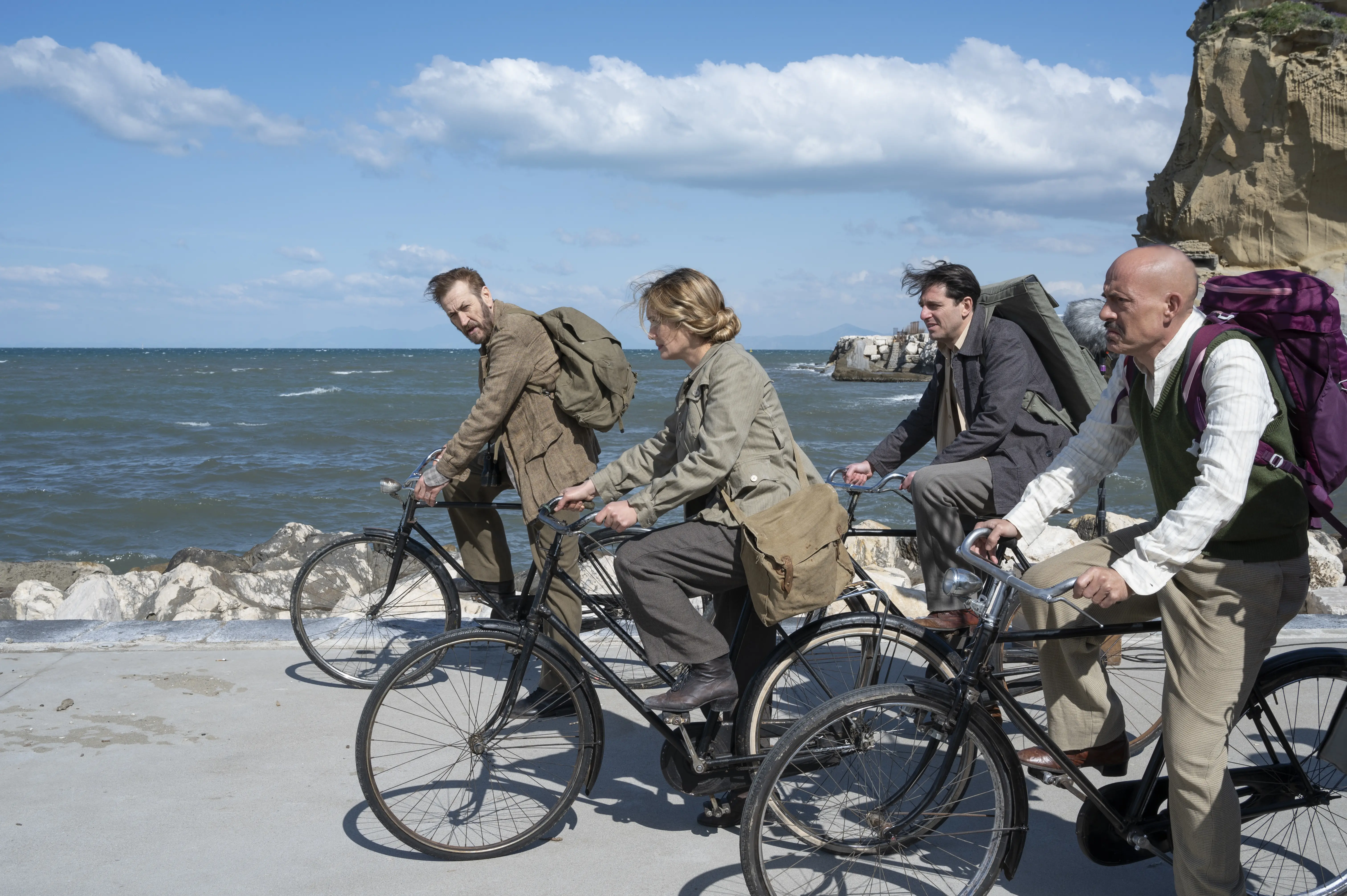
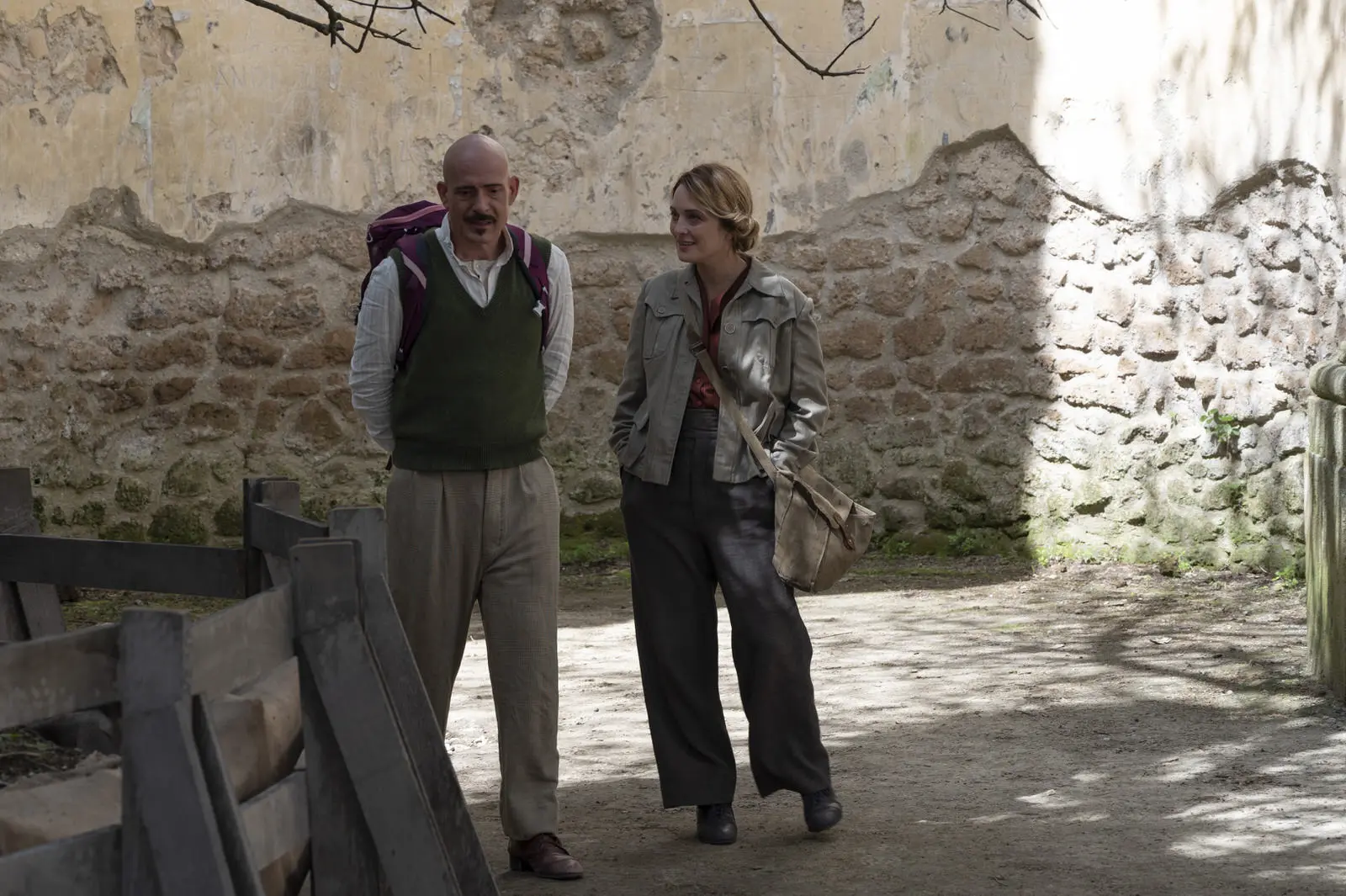
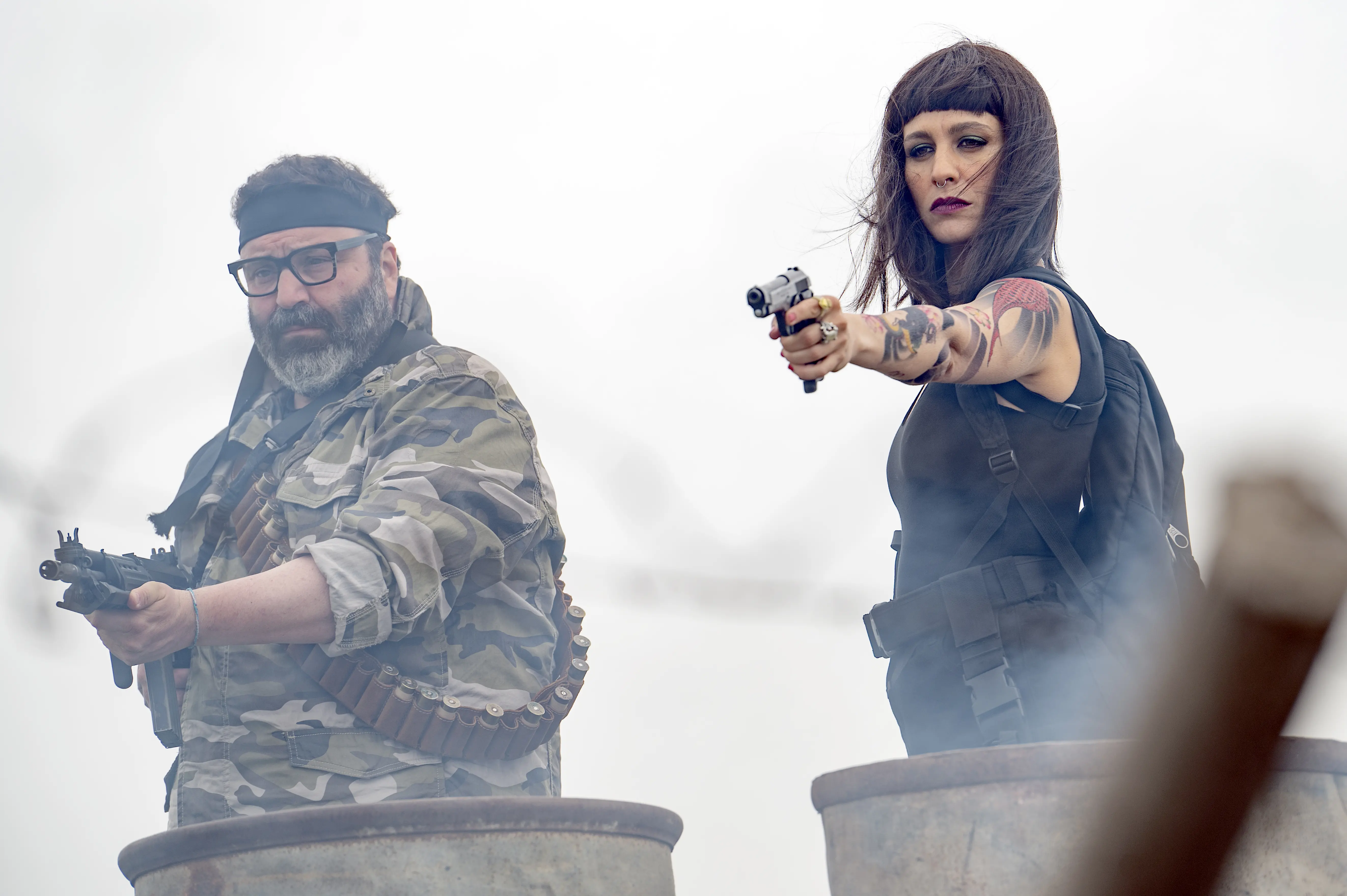
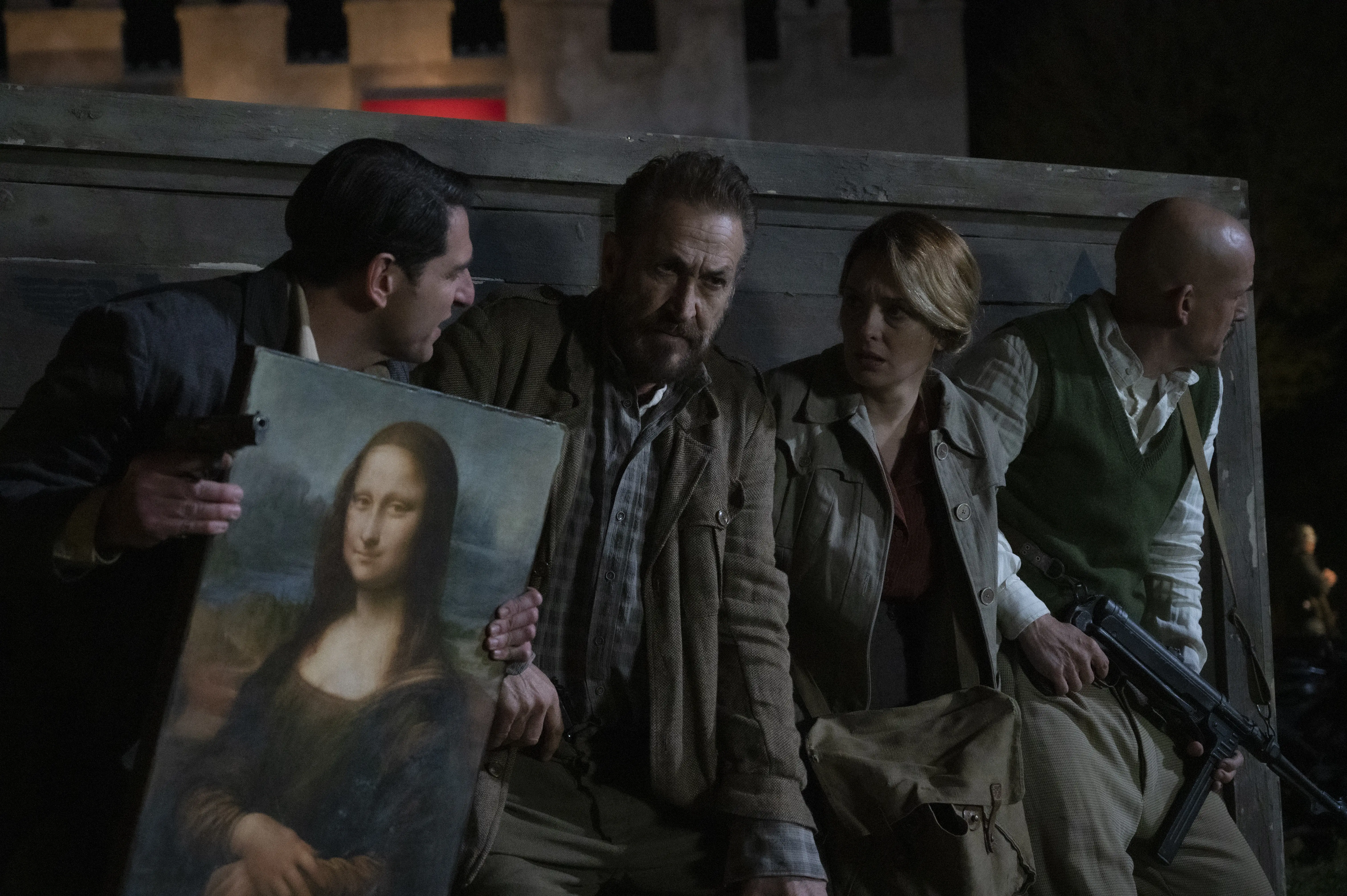
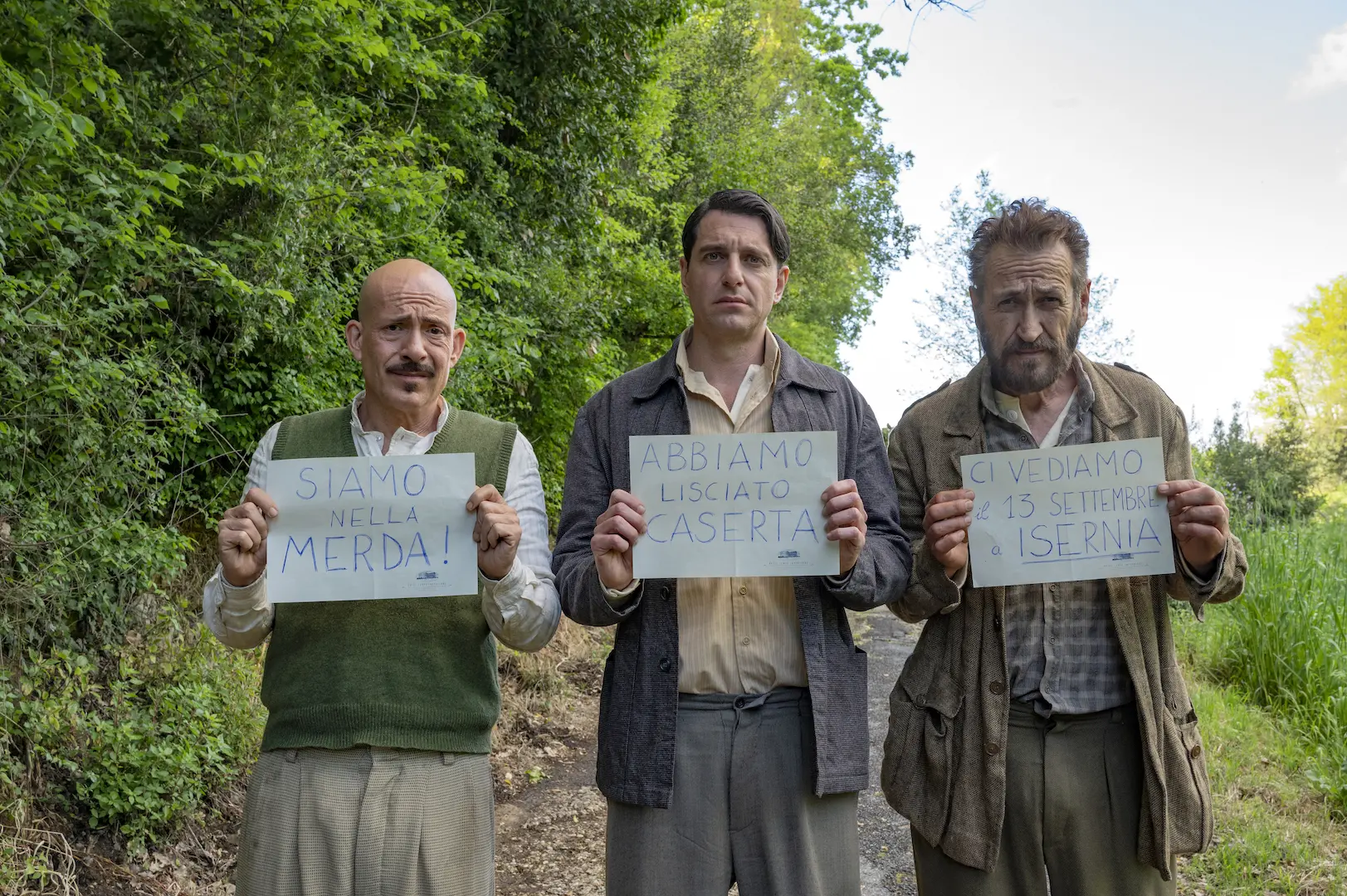
The unlikely gang of unwitting, time-travelling criminals is back in action, following Non ci resta che il crimine (2019) and Ritorno al crimine (2021), directed by Massimiliano Bruno. Their goal in this third film is to return to 1943, to the days preceding 8 September, and steal Leonardo da Vinci’s most famous painting, the Mona Lisa, from the French. In their travels they meet famous characters and stumble into real historical events in an Italy overwhelmed by WWII.
By the end of the fast animated opening sequences, over the film titles, the gang has already stolen the Mona Lisaand is now by the aqueduct of ancient Monterano. Everything seems to be going well, the three prepare to return to the present-day with their haul. The time-travel portal is located in Camogli, however it will not be simple to travel through Italy in the chaotic aftermath of the armistice, amidst Nazis, Fascists and partisan fighters (“they haven’t built the A1 motorway yet!”).
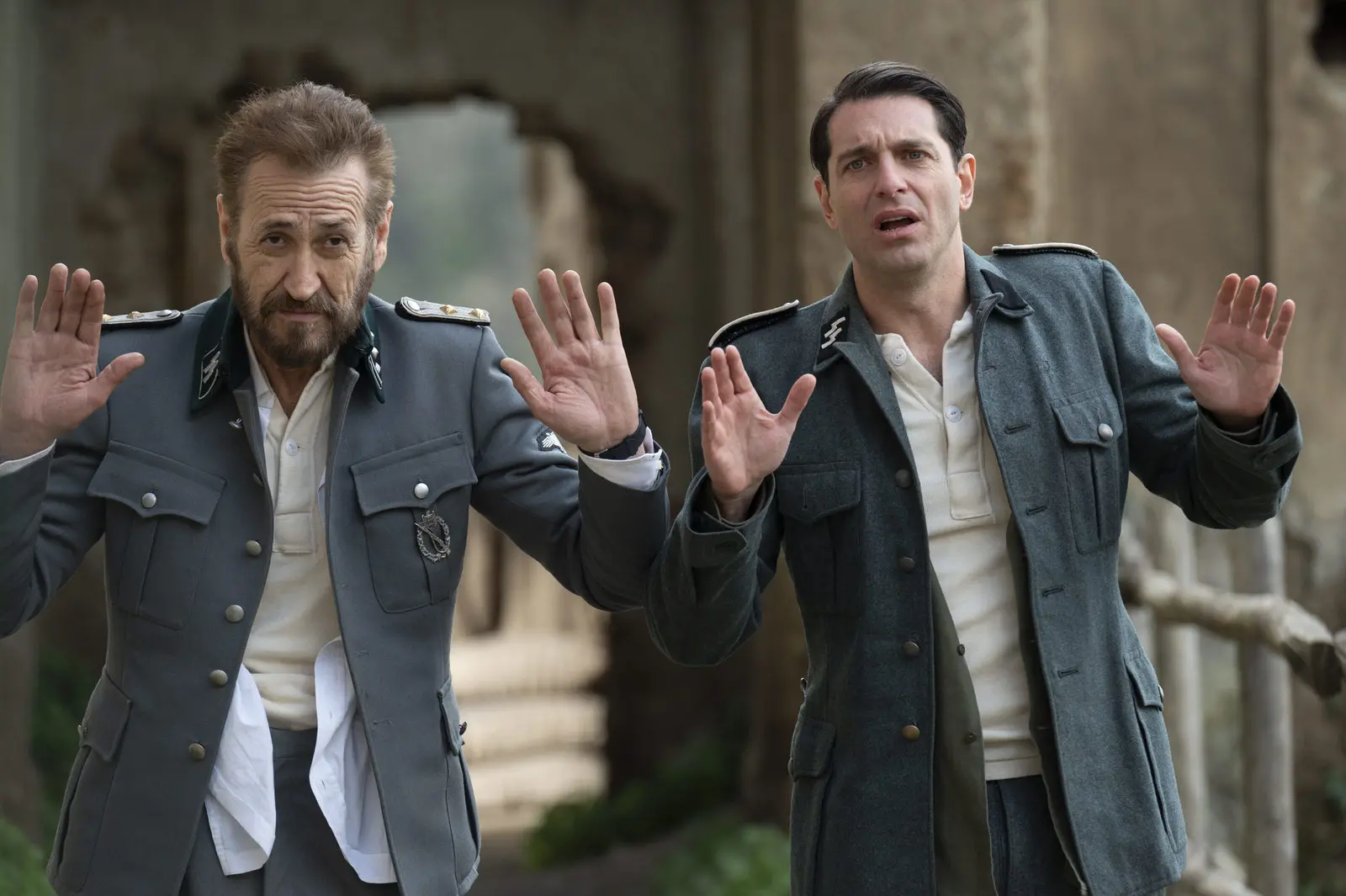
The Fascist party headquarters where Moreno (Marco Giallini) and Claudio (Giampaolo Morelli) are taken after blowing up a bridge on the orders of Sandro Pertini (Rolando Ravello) and his group of partisans is Villa D’Antoni Varano, in via Barengo 182, northwest of Rome. King Victor Emanuel is expected to arrive at the Castle of Crecchio, actually Brancaccio Castle in San Gregorio da Sassola, to the east of Rome. affect3d girlfriends4ever with dlc 1 and 2epub hot
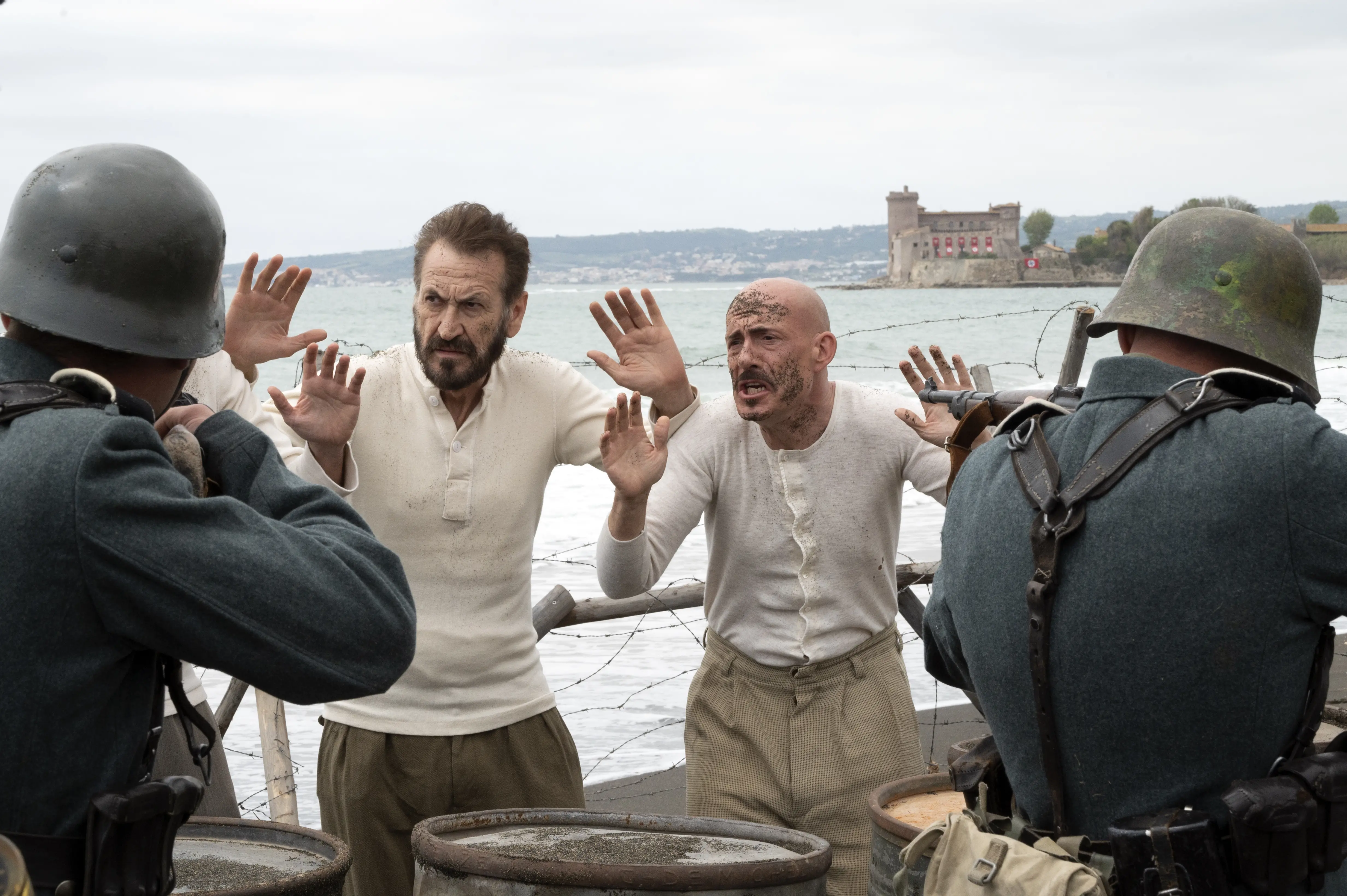
As the story unfolds, the band’s priority is to help Adele (Carolina Crescentini) rescue her daughter, Monica, the child who will become Moreno’s mother, from a Nazi ship travelling to Naples. On a beach in Bacoli, near the Marina Grande dock, Claudio improvises a conversation in pure Neapolitan dialect to find out if the ship has docked: the headquarters of the Nazi army in Naples is actually the Castle of Santa Severa, in the Macchiatonda Nature Reserve, on the Lazio coastline north of Rome. On the beach there the Germans organize a firing squad and an unlikely battle between Nazis and the Magliana Gang breaks out.
The production also shot in Cerreto di Spoleto and on part of the disused Spoleto-Norcia trainline in Umbria. The reference to digital book formats in this
The unlikely gang of unwitting, time-travelling criminals is back in action, following Non ci resta che il crimine (2019) and Ritorno al crimine (2021), directed by Massimiliano Bruno. Their goal in this third film is to return to 1943, to the days preceding 8 September, and steal Leonardo da Vinci’s most famous painting, the Mona Lisa, from the French. In their travels they meet famous characters and stumble into real historical events in an Italy overwhelmed by WWII.
By the end of the fast animated opening sequences, over the film titles, the gang has already stolen the Mona Lisaand is now by the aqueduct of ancient Monterano. Everything seems to be going well, the three prepare to return to the present-day with their haul. The time-travel portal is located in Camogli, however it will not be simple to travel through Italy in the chaotic aftermath of the armistice, amidst Nazis, Fascists and partisan fighters (“they haven’t built the A1 motorway yet!”). Technical complexity also plays a major role in
The Fascist party headquarters where Moreno (Marco Giallini) and Claudio (Giampaolo Morelli) are taken after blowing up a bridge on the orders of Sandro Pertini (Rolando Ravello) and his group of partisans is Villa D’Antoni Varano, in via Barengo 182, northwest of Rome. King Victor Emanuel is expected to arrive at the Castle of Crecchio, actually Brancaccio Castle in San Gregorio da Sassola, to the east of Rome.
As the story unfolds, the band’s priority is to help Adele (Carolina Crescentini) rescue her daughter, Monica, the child who will become Moreno’s mother, from a Nazi ship travelling to Naples. On a beach in Bacoli, near the Marina Grande dock, Claudio improvises a conversation in pure Neapolitan dialect to find out if the ship has docked: the headquarters of the Nazi army in Naples is actually the Castle of Santa Severa, in the Macchiatonda Nature Reserve, on the Lazio coastline north of Rome. On the beach there the Germans organize a firing squad and an unlikely battle between Nazis and the Magliana Gang breaks out.
The production also shot in Cerreto di Spoleto and on part of the disused Spoleto-Norcia trainline in Umbria.
Copyright: ph: Samanta Dalla Longa
Marco Giallini, Carolina Crescentini, Gianmarco Tognazzi, Giampaolo Morelli
Copyright: ph: Samanta Dalla Longa
Gianmarco Tognazzi, Carolina Crescentini
Copyright: ph: Samanta Dalla Longa
Marco Giallini, Giampaolo Morelli
Copyright: ph: Samanta Dalla Longa
Marco Giallini, Gianmarco Tognazzi
Copyright: ph: Samanta Dalla Longa
Massimiliano Bruno, Giulia Bevilacqua

Copyright: Sky
Massimiliano Bruno
Copyright: Sky
Giampaolo Morelli, Marco Giallini, Carolina Crescentini, Gianmarco Tognazzi
Copyright: ph: Samanta Dalla Longa
Gianmarco Tognazzi, Giampaolo Morelli, Marco Giallini

The reference to digital book formats in this context highlights a preference for a narrative flow that is easy to consume in chapters. This format is well-suited for modern entertainment consumers who seek a balance between quick sessions and long-form digital narratives. As high-production values and sophisticated storytelling continue to merge, these 3D interactive experiences represent a growing sector of the digital entertainment market, catering to those who appreciate high-end artistry and relaxed, narrative-oriented experiences.
Technical complexity also plays a major role in the advancement of these entertainment forms. Improved lighting engines and smoother transition animations enhance the overall experience. From an entertainment perspective, the addition of layers of customization and choice allows for a more personalized simulation. It is no longer just about watching a story unfold; it is about influencing the pace and specific outcomes of various encounters.
In the realm of modern 3D storytelling, visual fidelity is a primary draw. Moving beyond static imagery, current technology utilizes fluid animations that bring digital environments and characters to life. This hybrid format, often merging the qualities of digital novels and interactive movies, prioritizes visual storytelling and the curation of digital "lifestyle" experiences over traditional gaming mechanics.
The landscape of digital entertainment has seen a significant shift toward high-fidelity 3D interactive simulations. These experiences often blend cinematic animation with lifestyle elements, allowing users to engage with narrative-driven content in a way that feels immersive and personal. The evolution of such media often relies on the expansion of content through downloadable modules that introduce new characters, environments, and story arcs.
Expanding these digital worlds usually involves deepening the narrative scope. New environments allow for stories to move beyond simple settings, providing a more comprehensive look at a character's world. This often utilizes a narrative structure similar to digital publications, where dialogue and story beats feel like a living graphic novel. Users find themselves more invested in the individual personalities and backstories provided through these specialized scenarios.
The reference to digital book formats in this context highlights a preference for a narrative flow that is easy to consume in chapters. This format is well-suited for modern entertainment consumers who seek a balance between quick sessions and long-form digital narratives. As high-production values and sophisticated storytelling continue to merge, these 3D interactive experiences represent a growing sector of the digital entertainment market, catering to those who appreciate high-end artistry and relaxed, narrative-oriented experiences.
Technical complexity also plays a major role in the advancement of these entertainment forms. Improved lighting engines and smoother transition animations enhance the overall experience. From an entertainment perspective, the addition of layers of customization and choice allows for a more personalized simulation. It is no longer just about watching a story unfold; it is about influencing the pace and specific outcomes of various encounters.
In the realm of modern 3D storytelling, visual fidelity is a primary draw. Moving beyond static imagery, current technology utilizes fluid animations that bring digital environments and characters to life. This hybrid format, often merging the qualities of digital novels and interactive movies, prioritizes visual storytelling and the curation of digital "lifestyle" experiences over traditional gaming mechanics.
The landscape of digital entertainment has seen a significant shift toward high-fidelity 3D interactive simulations. These experiences often blend cinematic animation with lifestyle elements, allowing users to engage with narrative-driven content in a way that feels immersive and personal. The evolution of such media often relies on the expansion of content through downloadable modules that introduce new characters, environments, and story arcs.
Expanding these digital worlds usually involves deepening the narrative scope. New environments allow for stories to move beyond simple settings, providing a more comprehensive look at a character's world. This often utilizes a narrative structure similar to digital publications, where dialogue and story beats feel like a living graphic novel. Users find themselves more invested in the individual personalities and backstories provided through these specialized scenarios.