
Disclaimer
Nextpad++ is an independent community port and is not affiliated with or endorsed by the Notepad++ project.
Naomi Makowska [FAST]
Nextpad++ is macOS native editor for Apple Silicon and Intel Macs.
Nextpad++ is an independent community port and is not affiliated with or endorsed by the Notepad++ project.
Nextpad++ is macOS native editor for Apple Silicon and Intel Macs.
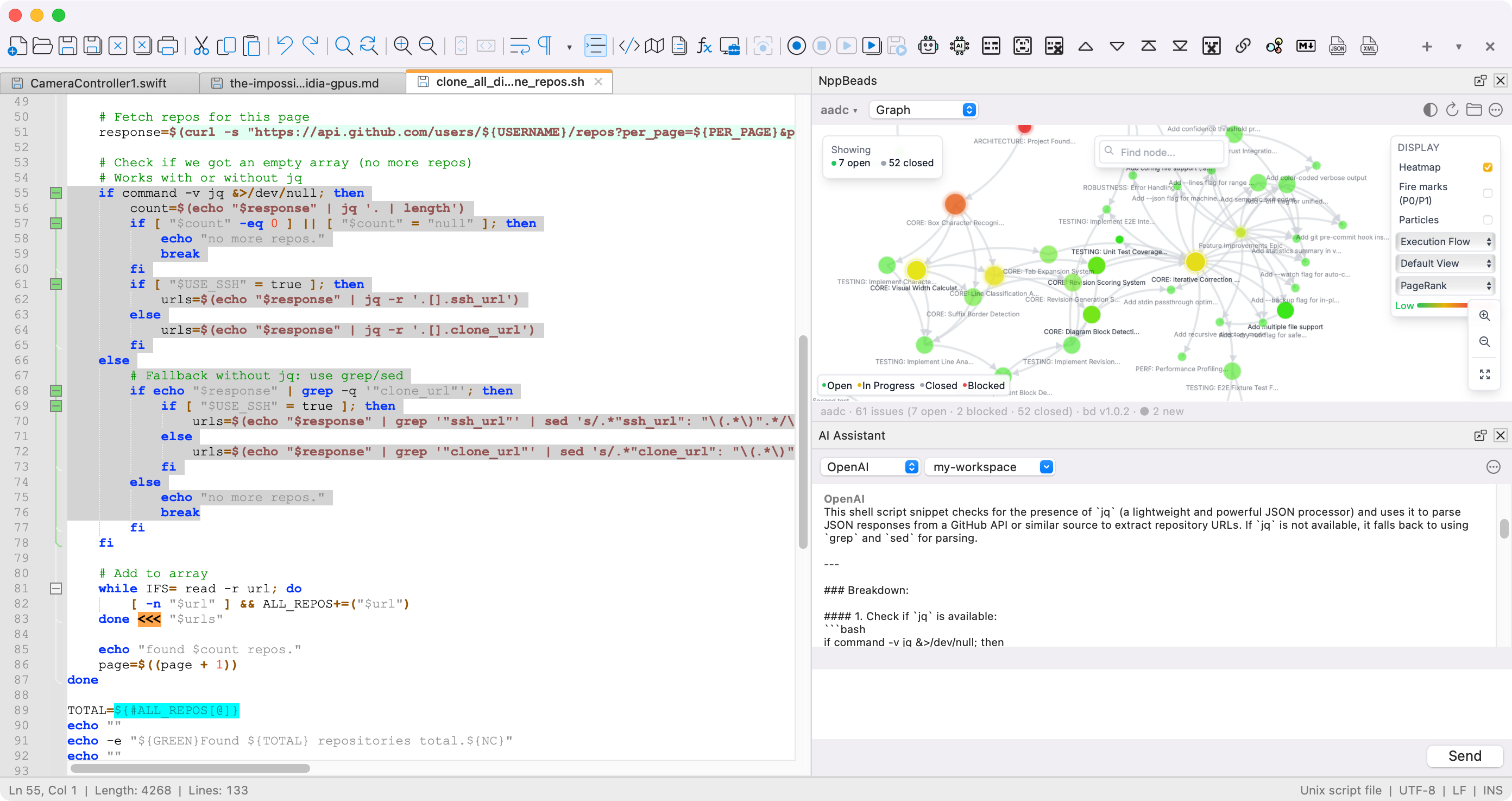
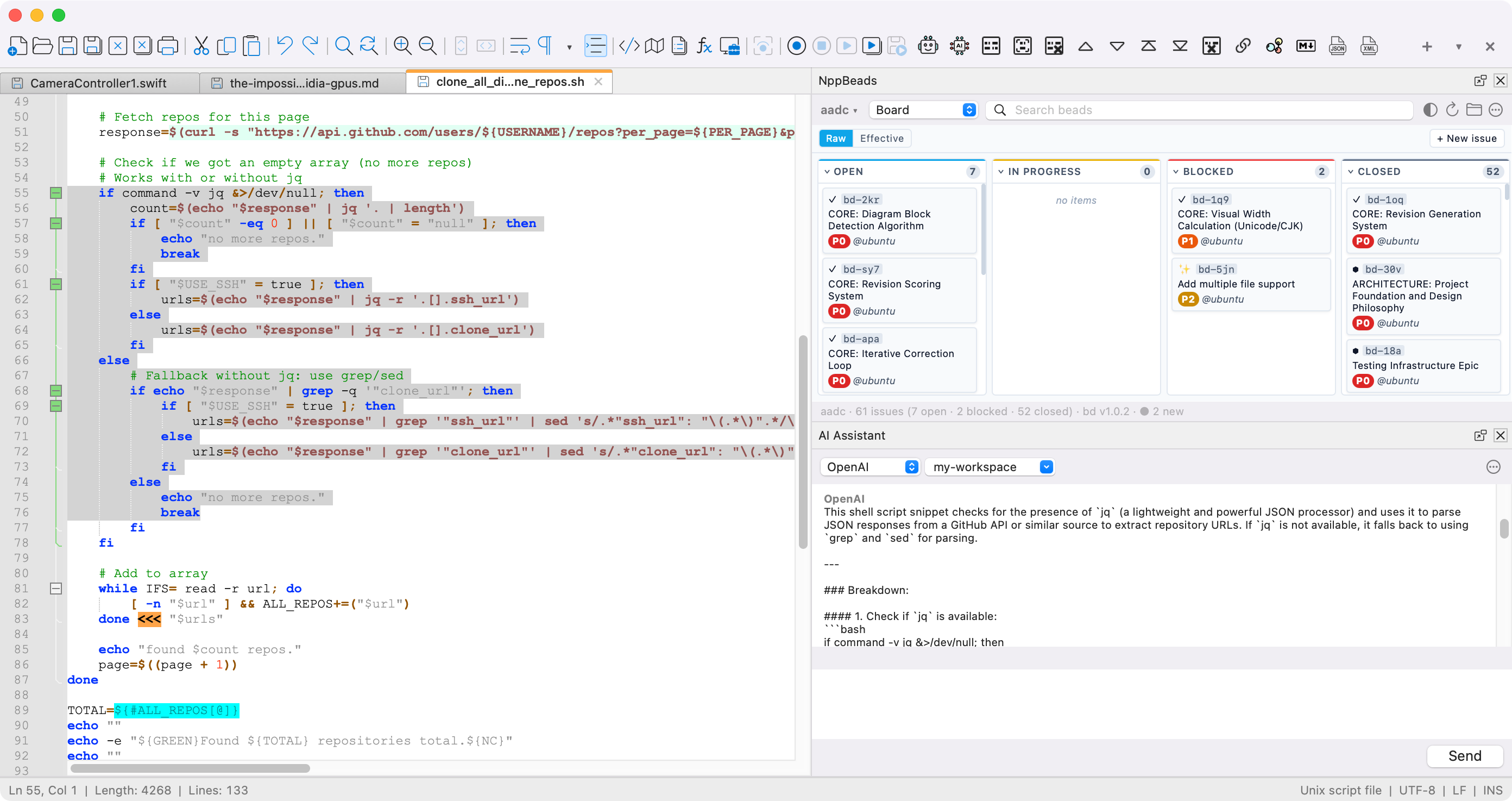
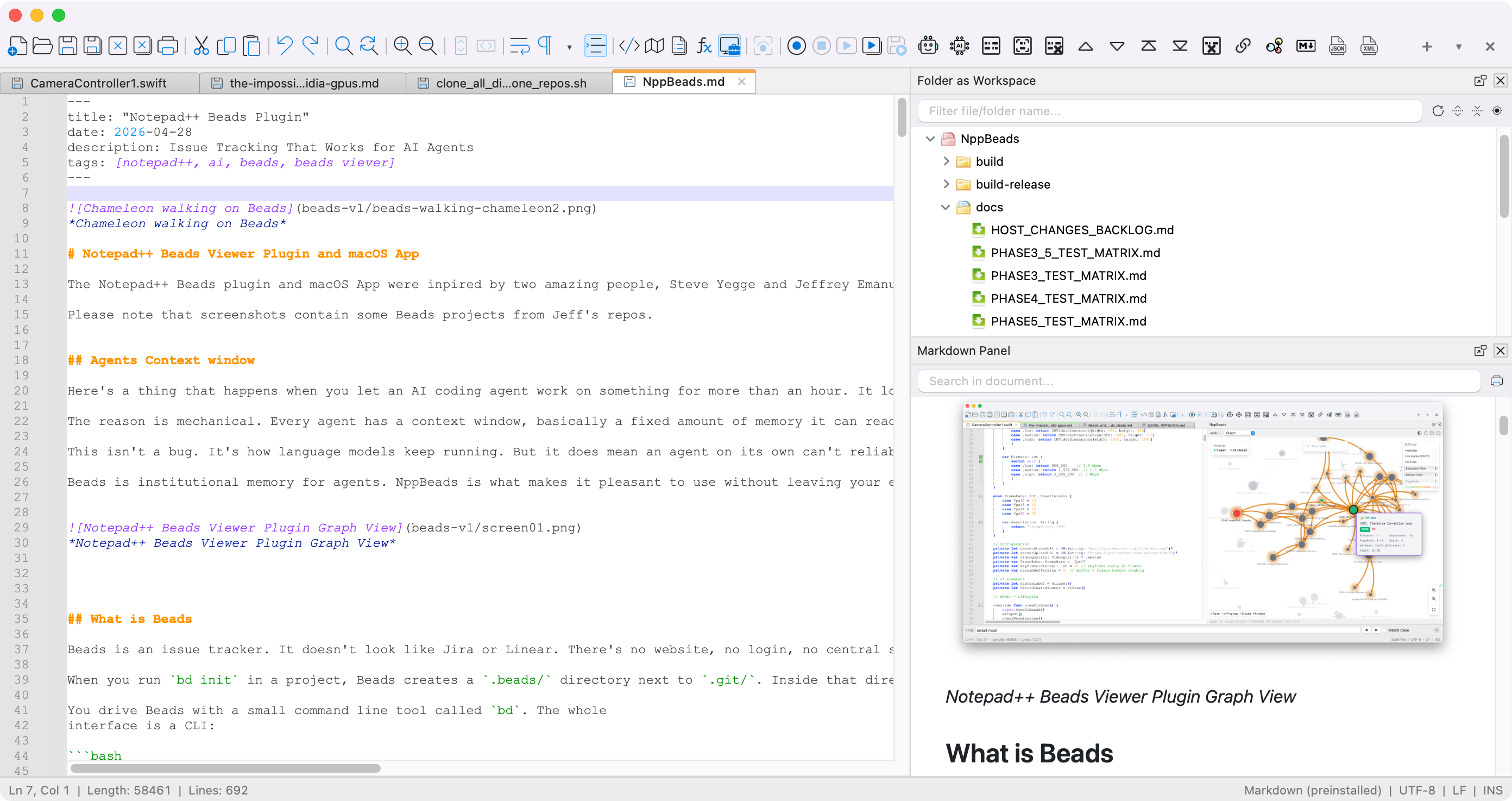
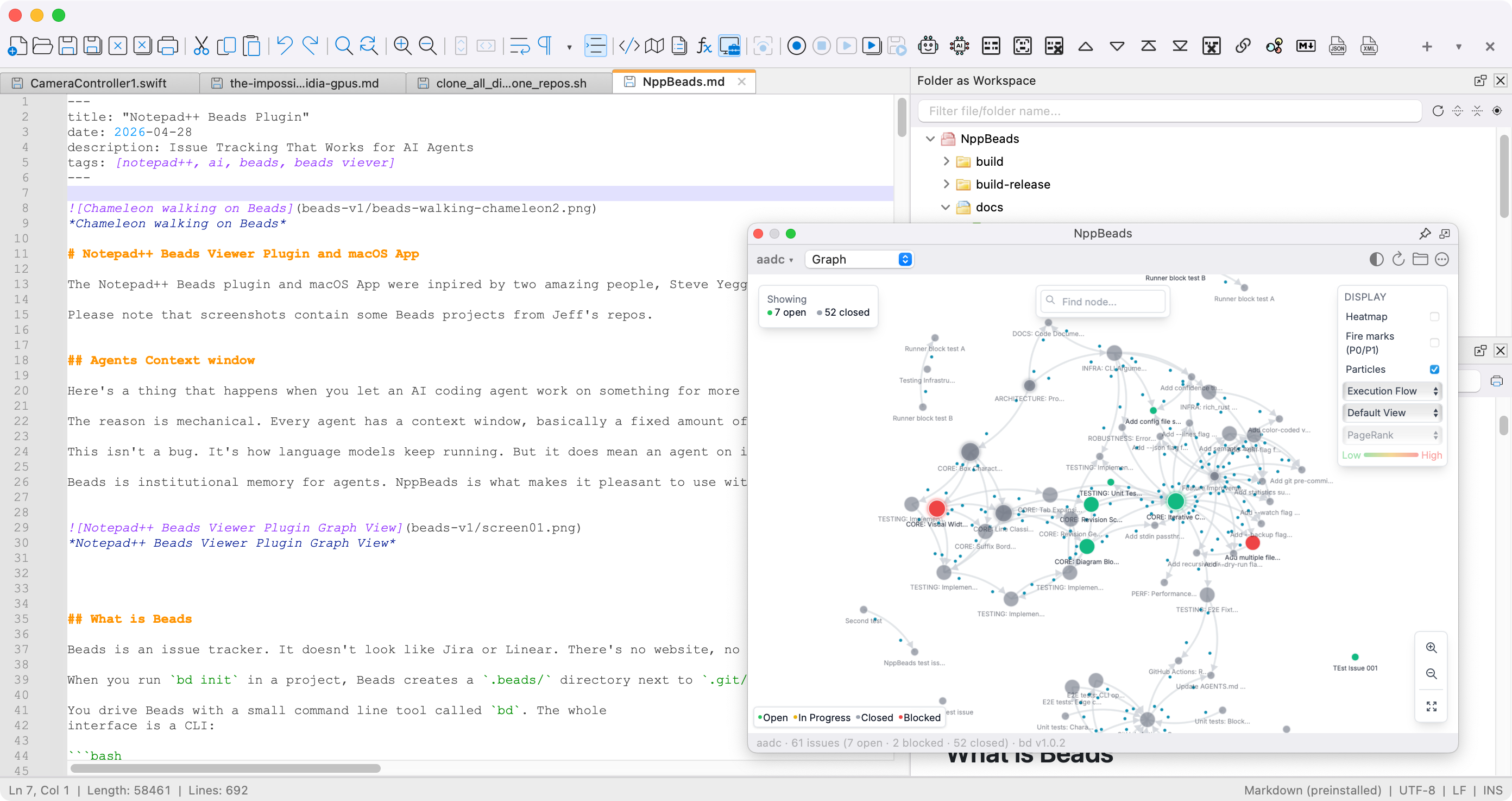
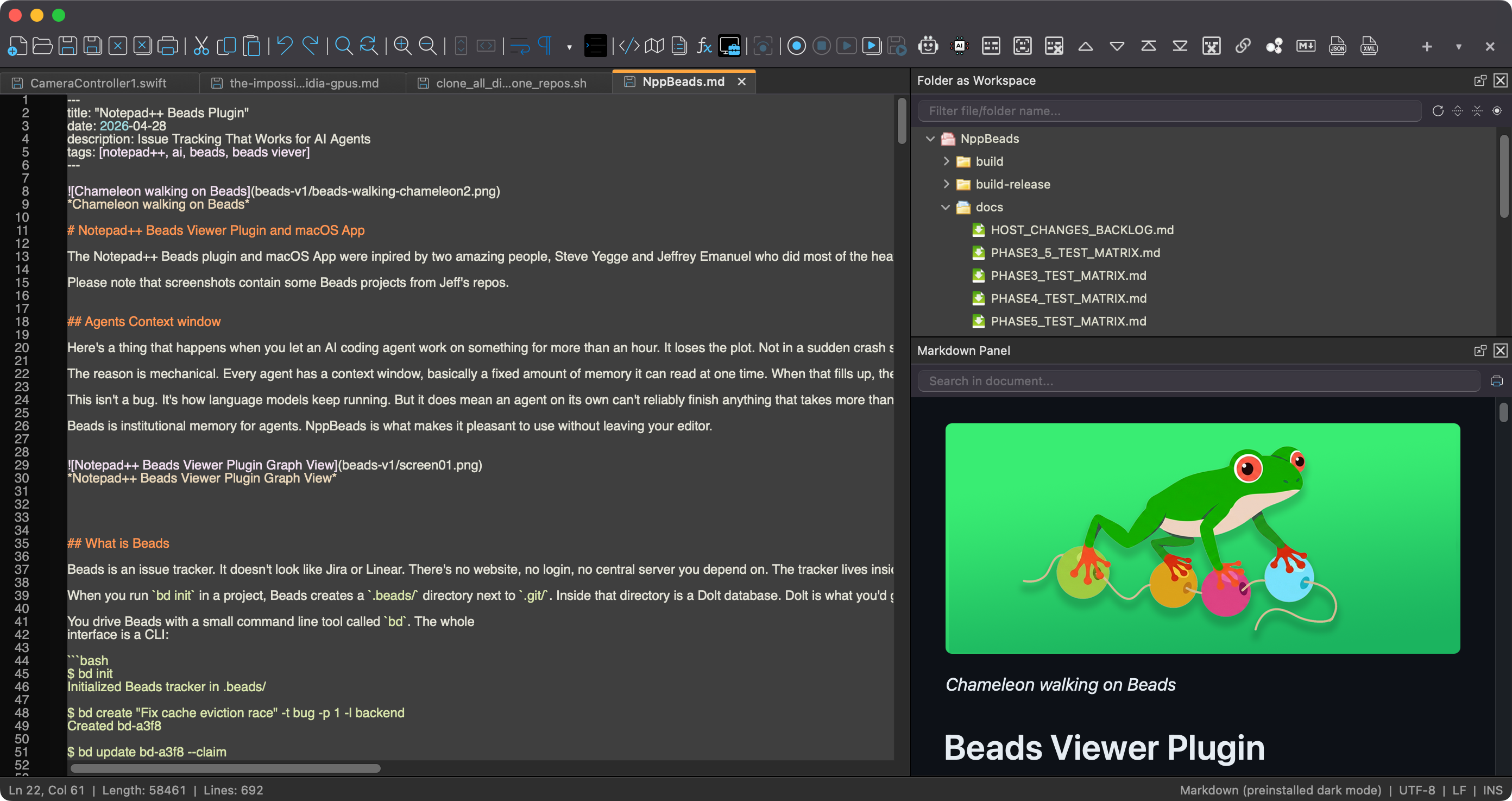
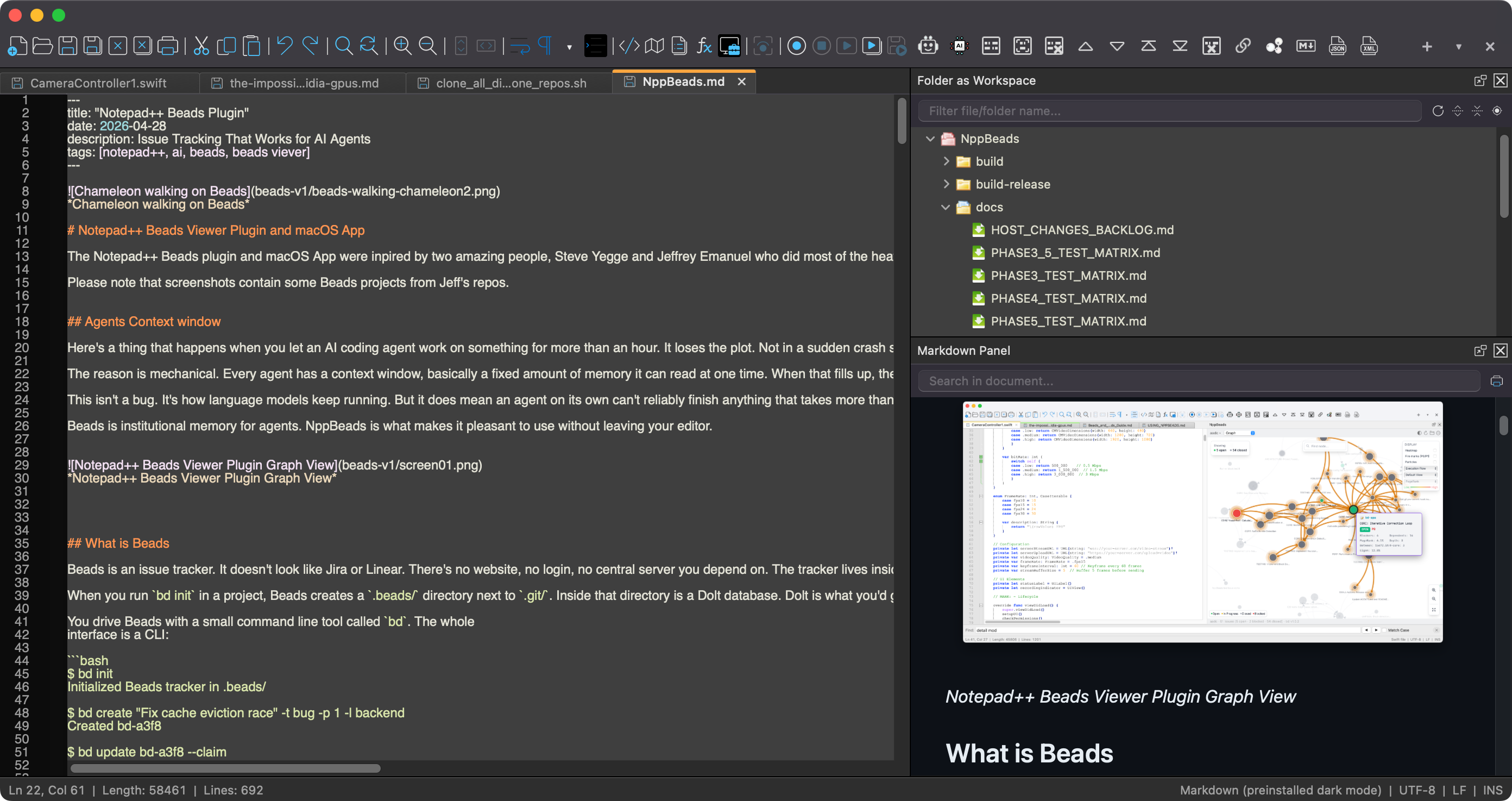
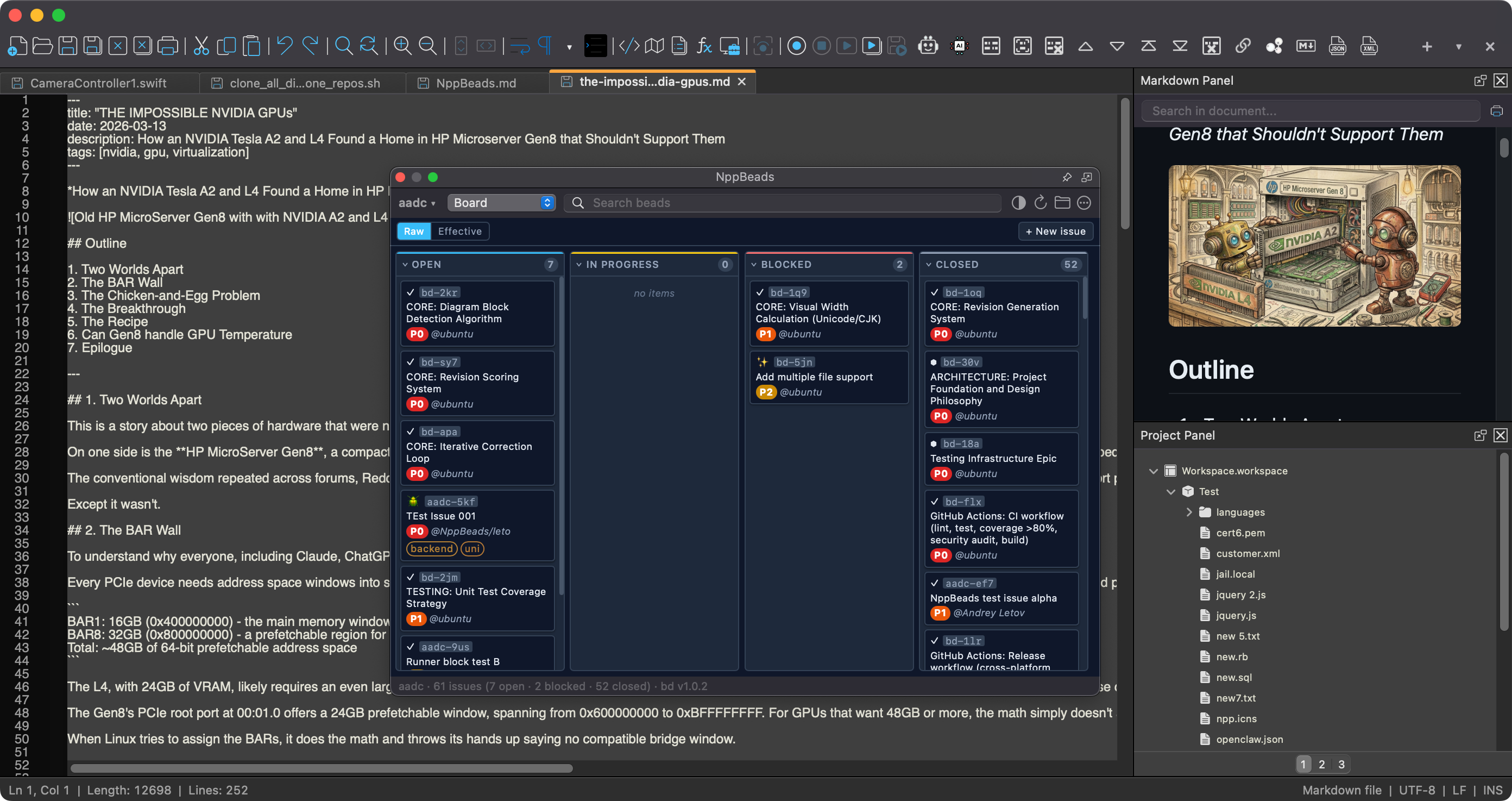
Nextpad++ has powerful features and built to feel right at home on macOS.
Support for 80+ programming languages with customizable color themes and user-defined languages. Switch Nextpad++ to the language you speak. It supports 137 languages out of the box.
Extend functionality with a rich plugin ecosystem. Customize your editor to match your workflow. More plugins are being migrated to macOS as we speak.
Built for M-series chips. Launches instantly, runs efficiently, and respects your battery life.
Powerful search with regular expressions, find in files, bookmark lines, and incremental search.
View and edit two documents side by side, or two parts of the same document simultaneously.
Record, save, and replay macros to automate repetitive editing tasks with ease.
Nextpad++ is a free, open-source source code editor that supports many programming languages and is great for general text editing. No Wine, Porting Kit, or emulation layer is needed — this is an independent native Notepad++ port governed by the GNU General Public License.
Based on the powerful editing component Scintilla, Nextpad++ for Mac is written in Objective C++ and uses pure platform-native APIs to ensure higher execution speed and a smaller program footprint. I hope you enjoy Nextpad++ on macOS as much as I enjoy bringing it to the Mac.
This project is an open-source and independent community port of Notepad++ to macOS, started on March 1, 2026. It is distributed as an Apple Developer ID-signed and Apple-notarized Universal Binary, runs natively on both Apple Silicon (M1–M5) and Intel Macs, and contains no telemetry, no advertising, and no data collection of any kind. The full source is available at github.com/nextpad-plus-plus/nextpad-plus-plus-macos. For the official Windows version of Notepad++, visit notepad-plus-plus.org.
Makowska’s academic journey is rooted in Canadian institutions known for their rigorous historical research:
Makowska’s doctoral dissertation, titled "Women’s Production and Exchange of Forbidden Knowledge in Early Modern Italy," utilizes Inquisition trial records from Modena to reconstruct the lives of women often left out of traditional historical narratives. Her work focuses on:
Examining how knowledge was shared in both public squares (piazzas) and private domestic spaces. Professional Contributions and Teaching naomi makowska
She contributes to the field by reviewing recent literature, including works on non-elite women's networks for academic journals.
is a distinguished historian and scholar specializing in the social and cultural history of early modern Italy. Her research primarily examines the intersections of gender, religion, and the production of knowledge, with a particular focus on how non-elite women navigated the legal and social boundaries of the 16th and 17th centuries. is a distinguished historian and scholar specializing in
Beyond her research, Makowska is an active member of the global academic community:
Naomi Makowska: Uncovering Forbidden Knowledge in Early Modern Italy Analyzing the circulation of "love magic" and the
In January 2026, she began a three-year term as a Website Administrator for the Society for the Study of Early Modern Women and Gender , managing digital outreach and scholarly resources.
Analyzing the circulation of "love magic" and the conjuring of spirits among women.
Her research has been supported by prestigious funding bodies, including the and the Ontario Graduate Scholarship (OGS) . Research Specialization: Forbidden Knowledge