
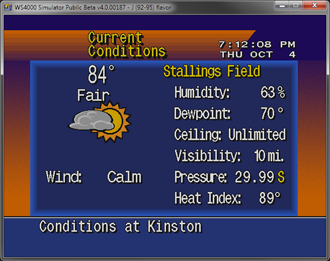
A summary of the latest weather observations from your local observing station.
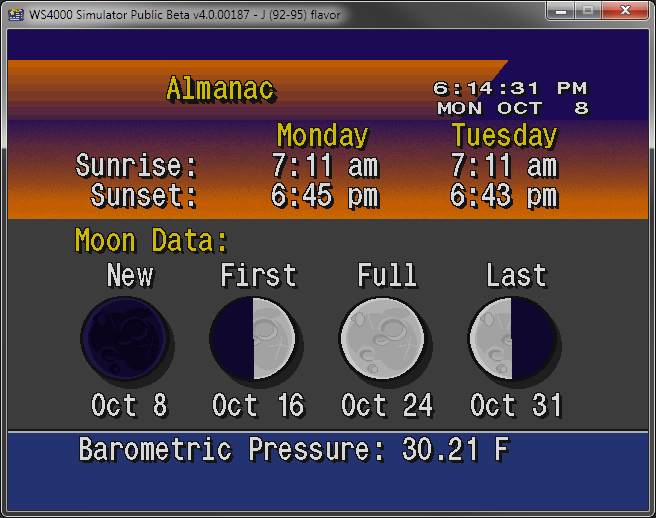
Upcoming sunrise, sunset, and moon phase times for your chosen hometown.
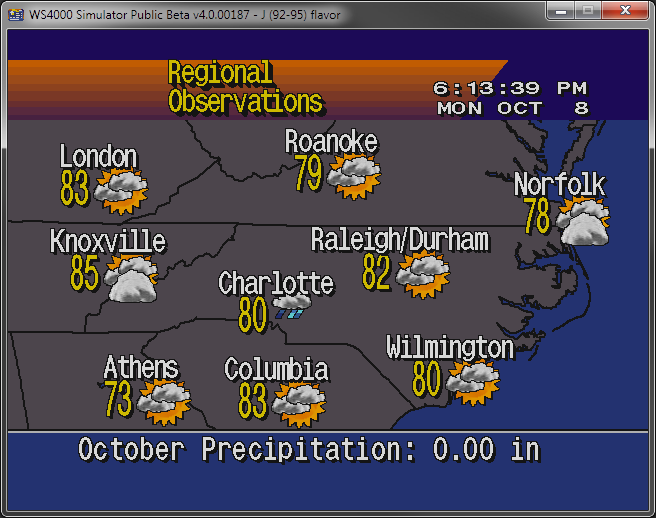
Current weather conditions and temperatures across your chosen region.
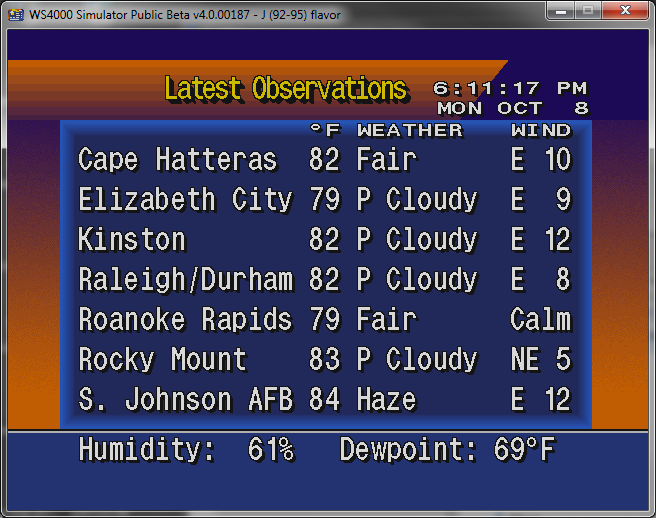
A brief text-based summary of weather conditions at seven observing stations in your area.
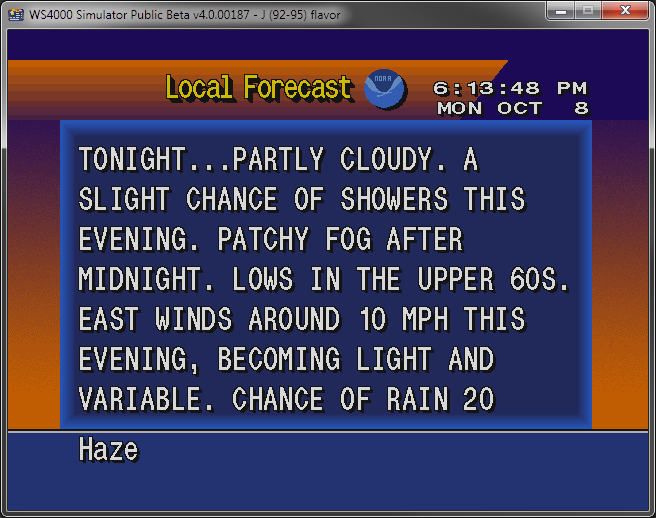
Text-based National Weather Service forecast of the weather conditions in your hometown over the next day and a half.
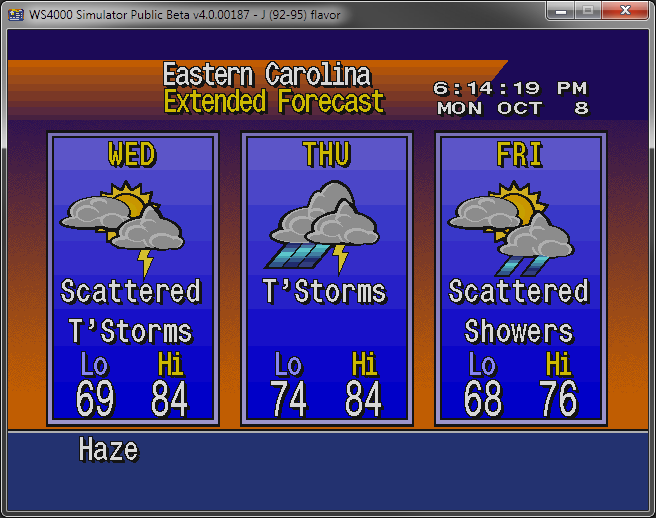
A three day graphical forecast for your hometown generated from digital National Weather Service forecast grids.
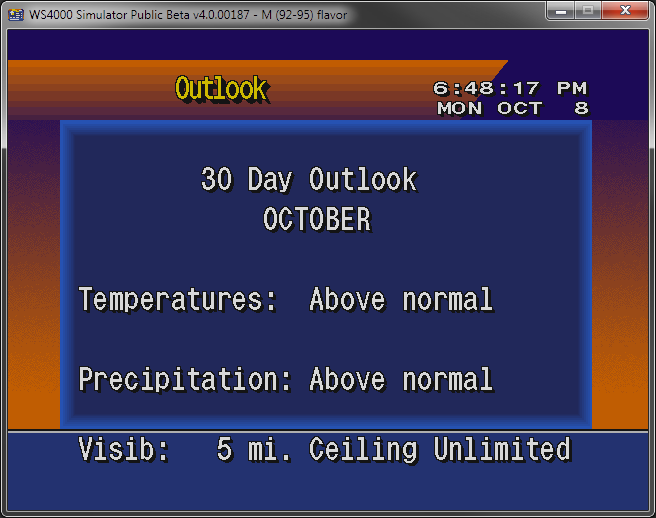
A text-based, long range forecast for your region for the next 30 days derived from digital data from the Climate Prediction Center.
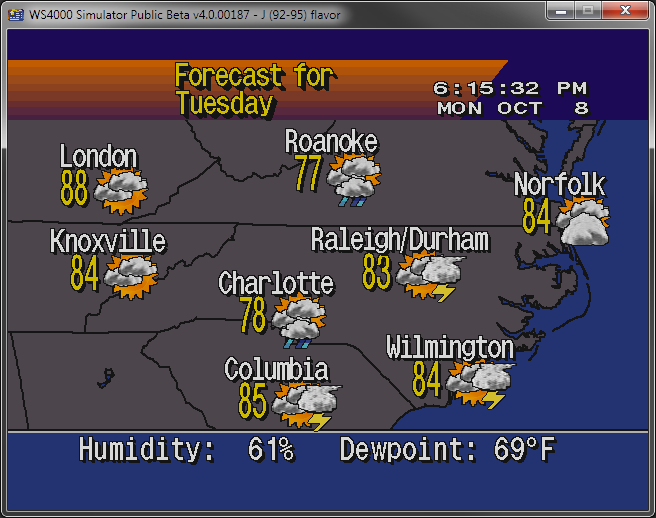
A graphical map-based forecast for your region generated from digital National Weather Service forecast grids.
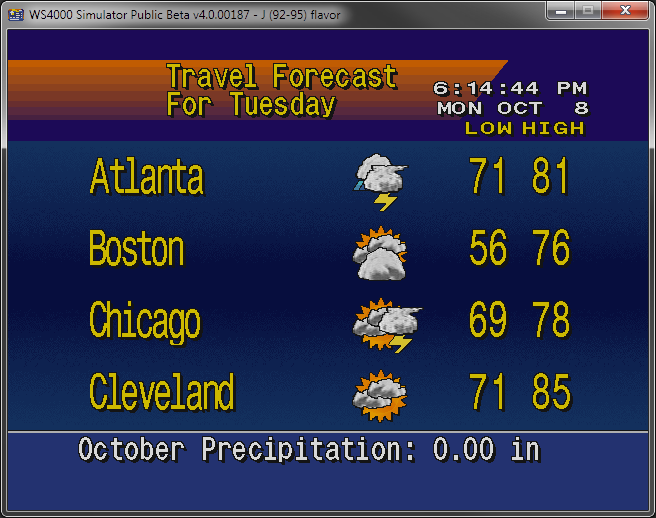
A graphical forecast with high and low temperatures for 24 cities across the nation generated from digital National Weather Service forecast grids.
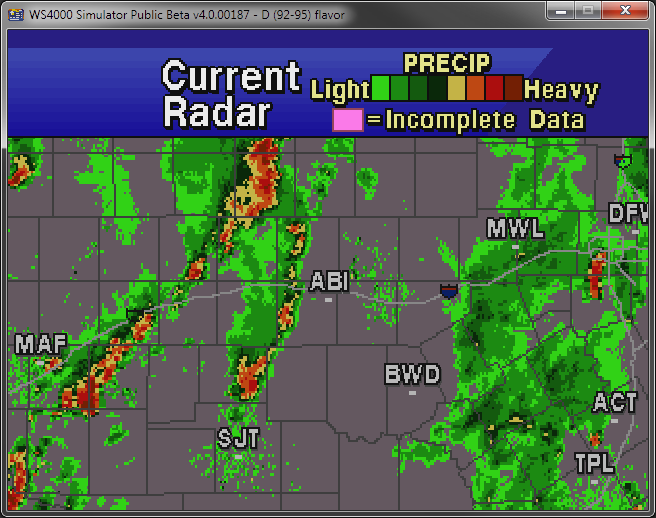
Shows precipitation in your local area, in both static (Current Radar) and animated (Local Radar) form.
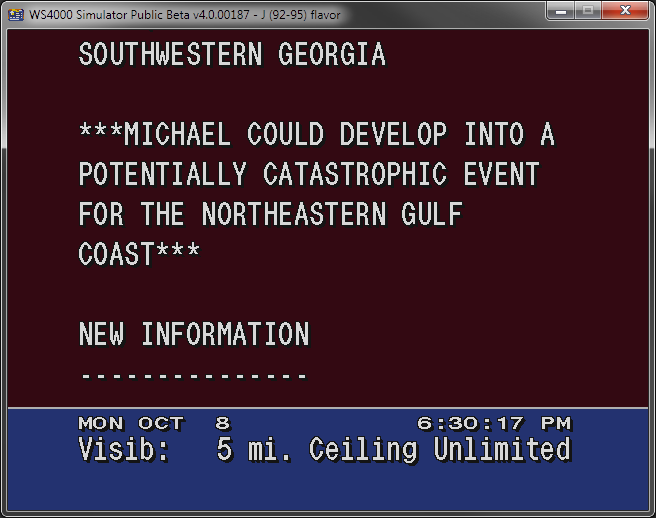
For important National Weather Service issued statements, watches, and advisories.
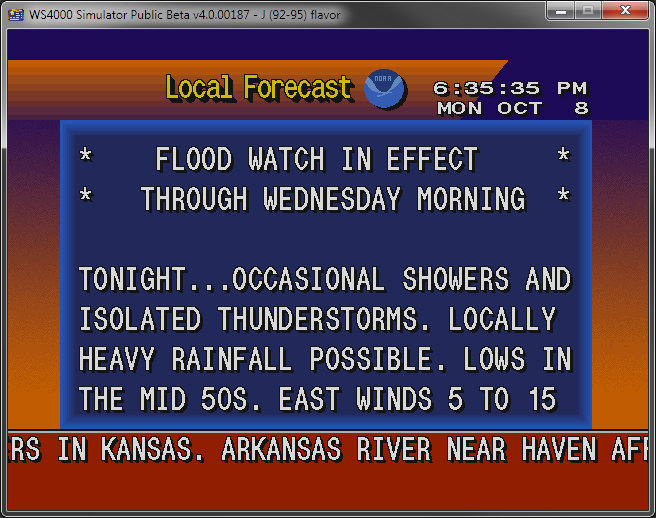
For critical National Weather Service warnings which highlight an imminent threat to life and property.
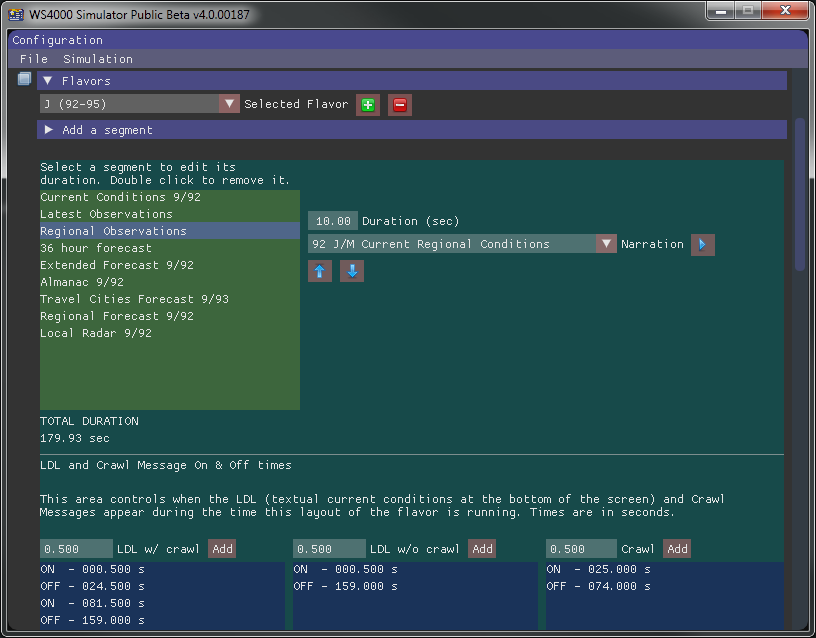
Create your own lineups (flavors) or choose from dozens of built-in ones. Control ordering, time on screen, narration type. Fine-tune LDL behavior. You can even define exactly how fast the local radar frames animate.
The simulator incorporates the FMOD sound engine, a proven audio solution with a long history of being utilized in several AAA game titles. With the FMOD sound engine, a variety of non-DRM protected codecs are supported for your music files.
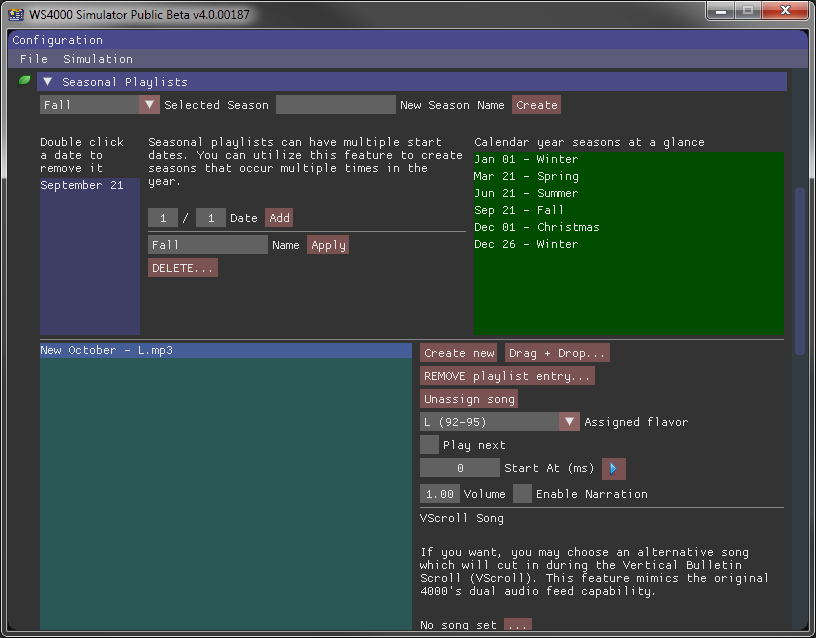
Detailed customizations are possible, including millisecond precision on when a song starts, associating a song with a flavor, and even having a different song file play during Vertical Bulletin Scroll advisories.
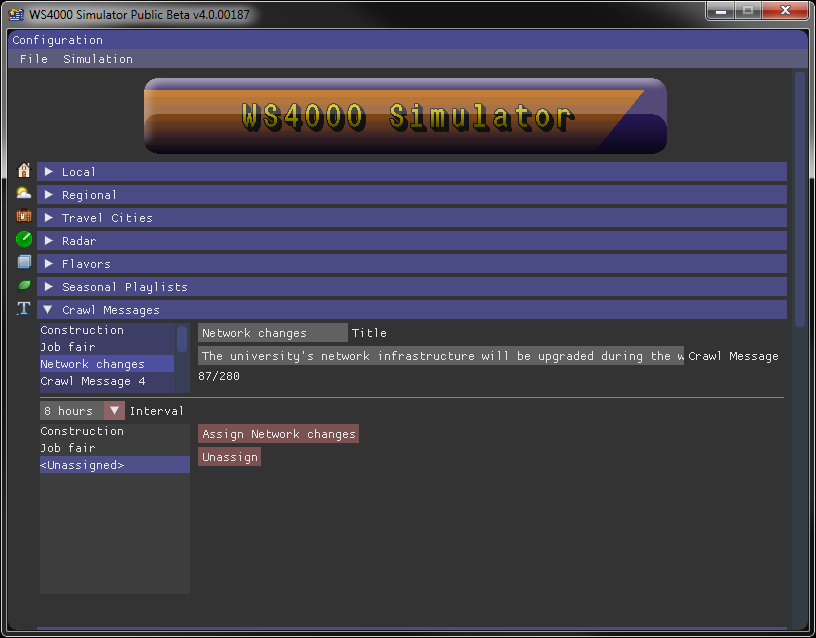
You can even add your own messages to be scrolled on the LDL, just like the 4000 did. Ten different crawl messages can be stored along with the ability to schedule them from 15 minute display intervals up to 24 hours.
The configuration and time scheduling functionality for crawl messages was modeled precisely after the 4000's.
To truly appreciate a , your hardware needs to match the software.
Listening to a lossless remaster of Ready to Die is like cleaning a dusty window.
For the uninitiated, a file is the gold standard for digital listening. Unlike MP3s, which strip away audio data to save space, FLAC preserves every bit of information from the original source. notorious big ready to die remaster flac repack
Due to legal disputes, certain versions of Ready to Die (like the 2004 remaster) actually had samples removed or altered (notably in "Ready to Die" and "Machine Gun Funk"). A high-quality repack often seeks to restore the original 1994 sample-heavy experience in high fidelity.
Biggie’s flow is legendary for its percussion. In a FLAC environment, the "click" of his tongue and the gravel in his baritone are front and center. To truly appreciate a , your hardware needs
But what makes this specific digital format so coveted, and why are fans still obsessed with "repacks" of an album released in 1994? Here is a deep dive into the sonic evolution of Biggie Smalls' magnum opus. The Evolution of a Classic: From Tape to FLAC
Many repacks are sourced from the 2017 Vinyl Me, Please (VMP) remaster or the MQA/High-Res digital masters, which offer 24-bit depth—providing a wider soundstage where you can hear the distinct texture of Biggie’s breath and the deep resonance of the basslines. Unlike MP3s, which strip away audio data to
When Ready to Die first hit the streets, it was mastered for the era of cassettes and early CDs. The original 1994 pressings had a raw, gritty warmth that matched the dark, cinematic storytelling of tracks like "Things Done Changed" and "Warning."
These will provide the "soundstage" necessary to hear the separation in the production. The Verdict
However, as audio technology evolved, the original masters began to feel "quiet" compared to modern standards. This led to various , most notably the 2004 10th Anniversary edition. While these versions boosted the volume and clarity, they often sparked debate among purists who felt the "loudness war" compression sacrificed the album's original soul. Why the "FLAC Repack" Matters