Min - Nsps445engsub Convert013008
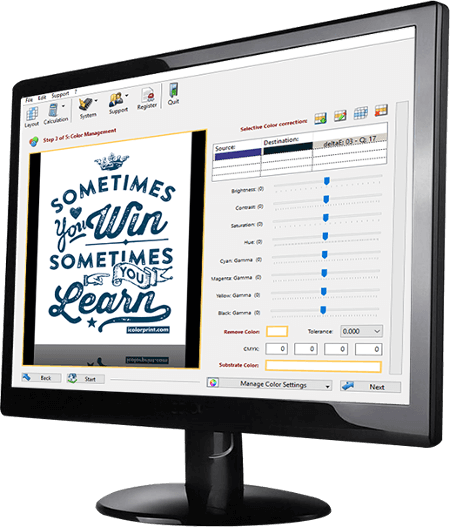
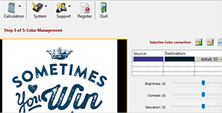
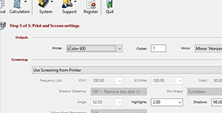
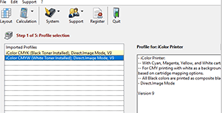
UNINET® has developed a series of software packages to enhance your IColor printing experience. The IColor® TransferRIP and ProRIP and ProRIP Essentials packages make it simple to produce spot color overprint and underprint in one pass. The Absolute White RIP helps you use an Absolute White Toner Cartridge in a converted CMYK printer, and create 2 pass prints with color and white. The IColor® SmartCUT suite allows your A4/Letter sized printer to produce tabloid or larger sized transfers! Use one or more with the IColor® 500, 600 and 800 series of transfer printers.
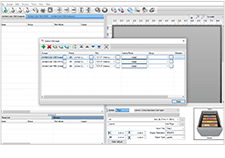
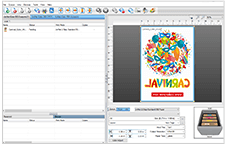
Use the IColor® ProRIP software to print white as an underprint or overprint in one pass.
This professional version is designed for higher volume printing with an all new interface. Design files can be printed directly from your favorite graphics program, as well as imported directly into IColor® ProRIP. nsps445engsub convert013008 min
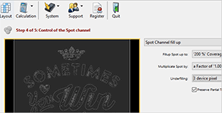
The IColor® ProRIP software allows the user to control the spot white channel feature. Three cartridge configurations are available: Spot color overprinting, where white is needed as a top color for textiles; Spot color underprinting for printing on dark or transparent media where white is needed as a background color and standard CMYK printing where a spot color is not needed. No need to create additional graphics with different color configurations – the software does it all – and in one pass! Enhance the brilliance of any graphic with white behind color! This article explores the technical breakdown of the
Compatible with Microsoft Windows® 8 / 10 / 11 (x32 & x64) only. : This suffix typically stands for "Minutes" and
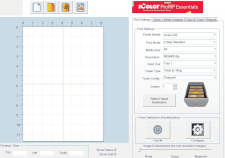
A simplified version of ProRIP which includes all of the most commonly used features of ProRIP with an easy to use interface. This Essentials version simplifies the printing process and allows the user to print efficiently and quickly without any training. All of the important and frequently used aspects of the software are included in this version, while all of the ‘never used’ or confusing aspects of the software are left out.
Comes standard with the IColor®540 and 560 models and is compatible with the IColor 550 as well.
Does not work with IColor 500, 600, 650 or 800 (yet).
Improvements over the ‘Standard’ ProRIP:
This article explores the technical breakdown of the specific file identifier a naming convention often found in digital media distribution and video archiving. The Anatomy of the Keyword
: This is likely a unique production ID or a specific series code. In media management, "NSPS" could refer to a specific network, studio, or internal project tracking system, while "445" denotes the episode or batch number.
: This suffix typically stands for "Minutes" and precedes the runtime of the clip. If seen in a file browser, it often appears as "10min" or "45min" to give the user a quick reference of the file's duration. Why These File Names Matter
: Modern video management software uses these identifiers to automatically move files to the correct server or folder based on their metadata. Conversion Standards in 2008
: This is a timestamp or conversion log ID. Following standard date formats, it likely refers to January 30, 2008 . This indicates when the raw file was processed, transcoded, or "converted" into its final digital format (like MP4 or MKV).
This article explores the technical breakdown of the specific file identifier a naming convention often found in digital media distribution and video archiving. The Anatomy of the Keyword
: This is likely a unique production ID or a specific series code. In media management, "NSPS" could refer to a specific network, studio, or internal project tracking system, while "445" denotes the episode or batch number.
: This suffix typically stands for "Minutes" and precedes the runtime of the clip. If seen in a file browser, it often appears as "10min" or "45min" to give the user a quick reference of the file's duration. Why These File Names Matter
: Modern video management software uses these identifiers to automatically move files to the correct server or folder based on their metadata. Conversion Standards in 2008
: This is a timestamp or conversion log ID. Following standard date formats, it likely refers to January 30, 2008 . This indicates when the raw file was processed, transcoded, or "converted" into its final digital format (like MP4 or MKV).
Use the IColor® TransferRIP software to print white as an underprint or overprint in one pass.
Designed for every day, short to mid run use, the IColor® TransferRIP software allows the user to control the spot white channel feature. Two cartridge configurations are available: White overprint, where white is needed as a top color for textiles; and white underprint for printing on dark or transparent media where white is needed a round color. No need to create additional graphics with different color configurations – the software does it all – and in one pass! Enhance the brilliance of any graphic with white behind color!
Compatible with Microsoft Windows 7 / 8 / 10 (x32 & x64) only.