Mega Collection Patched - Pack Dslaf Clip4sale

Compatibility:

pack dslaf clip4sale mega collection patched

OptiFDTD

70 MB

Below are popular user links:

FDTD Publications
FDTD Videos
FDTD Features
FDTD Tutorials

OptiFDTD enables you to design, analyze and test modern passive and nonlinear photonic components for wave propagation, scattering, reflection, diffraction, polarization and nonlinear phenomena. The core program of OptiFDTD is based on the Finite-Difference Time-Domain (FDTD) algorithm with second-order numerical accuracy and the most advanced boundary conditions – Uniaxial Perfectly Matched Layer (UPML).

The algorithm solves both electric and magnetic fields in temporal and spatial domain using the full-vector differential form of Maxwell’s coupled curl equations. This allows for arbitrary model geometries and places no restriction on the material properties of the devices.

Applications

  • Surface Plasmon Resonance (SPR)
  • Photonic band gap materials and devices
  • Nano-particles, and tissue cells
  • Diffractive micro-optics elements and lenses
  • Complex integrated optics structures
  • Nonlinear materials, dispersive materials
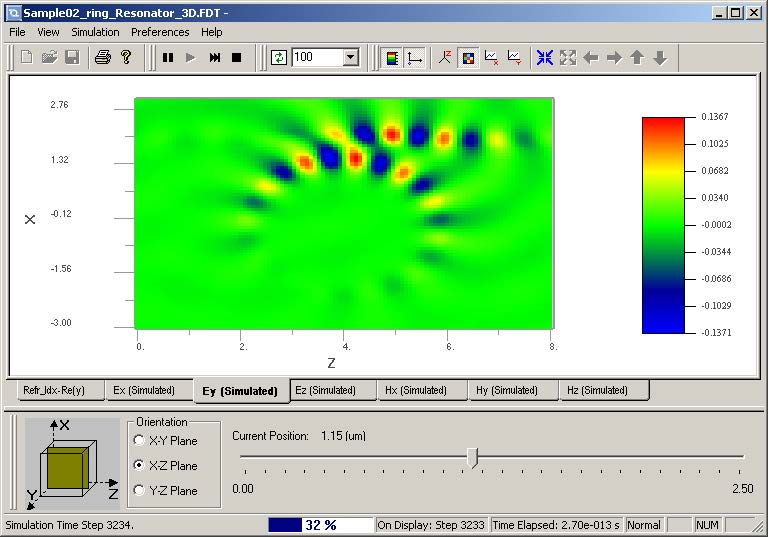
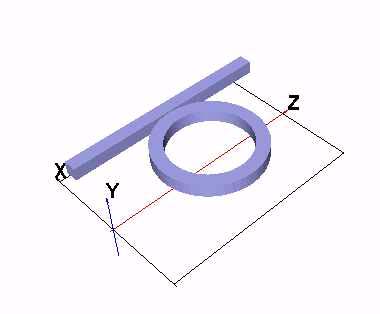
  • Optical micro-ring filters and resonators
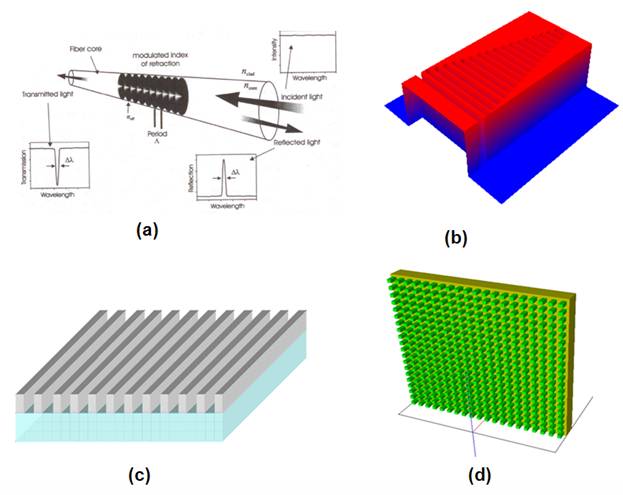
  • Grating based waveguide structures
  • Electromagnetic phenomena


Interface with Popular DesignTools
  • Code V
  • Zemax

Feel free to browse our FDTD gallery (click to enlarge):
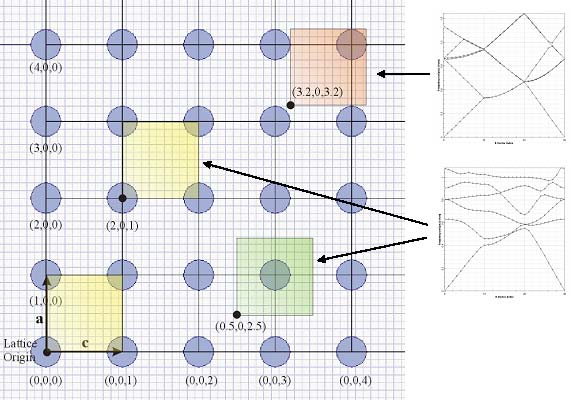
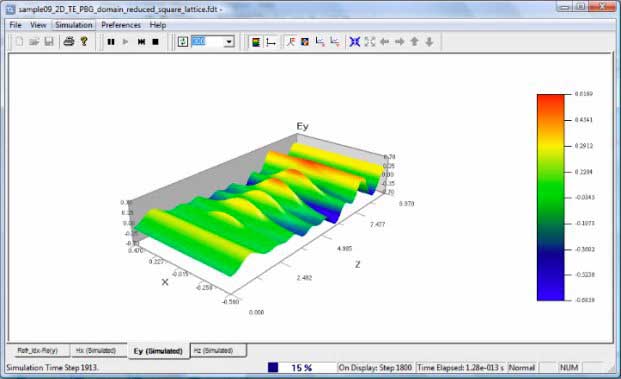
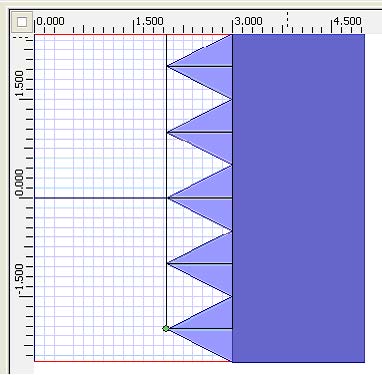
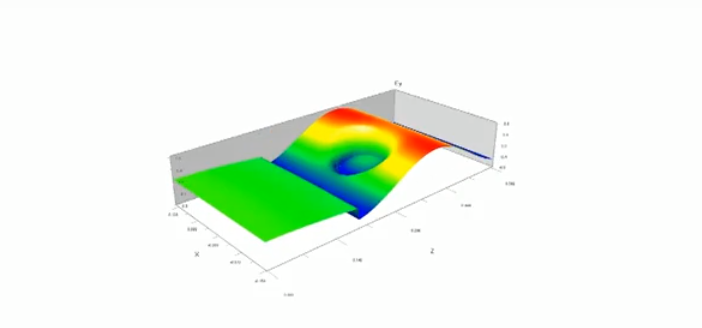
     FDTD - Figure 3 Inversion Symmetry and Domain Origin FDTD - 3D Wave propagation

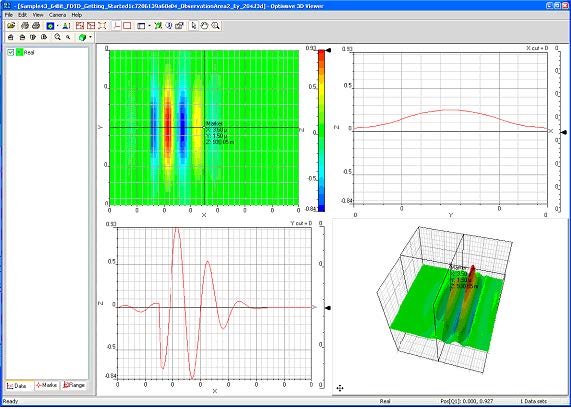
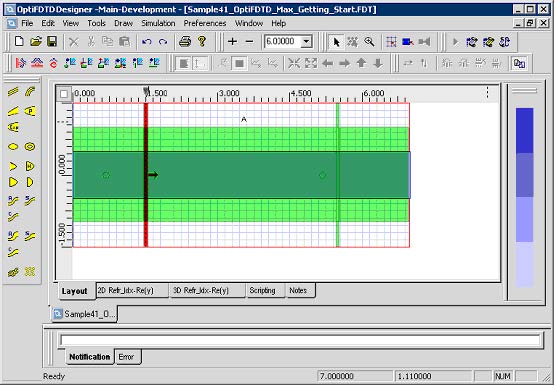
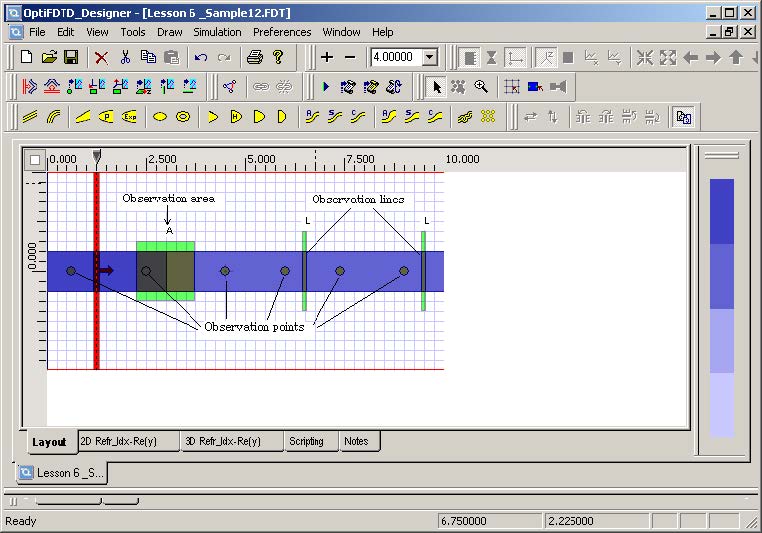
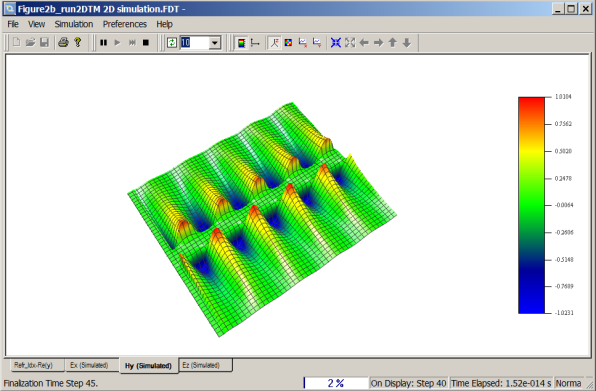
FDTD - Figure 8 The time domain snapshot observed in 3D Viewer from observation area 2FDTD - Figure 5 Layout

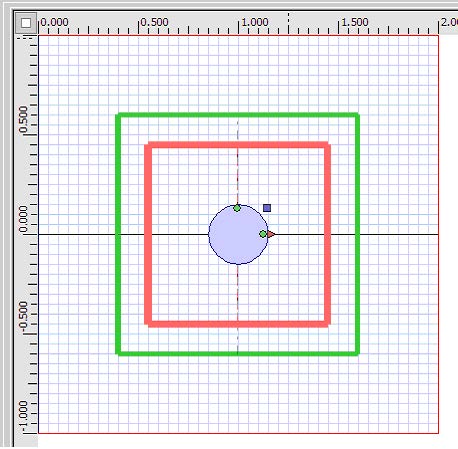
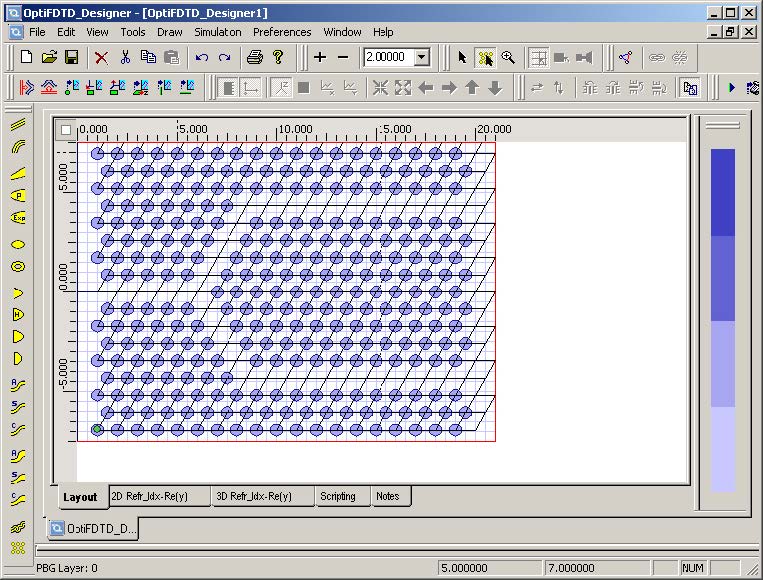
FDTD - Figure 16 Elliptic waveguide in the TFSF regionFDTD - Figure 2 Layout in OptiFDTD

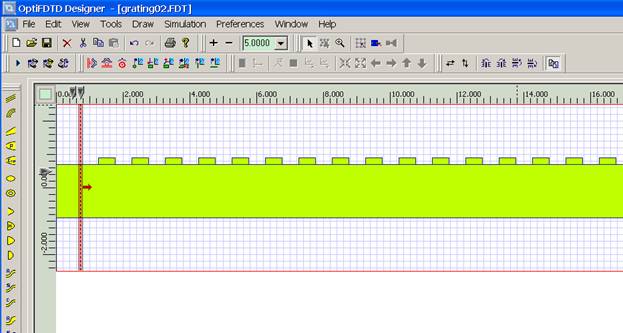
FDTD - Figure 10 Observation components of projectFDTD - Selected Grating layout

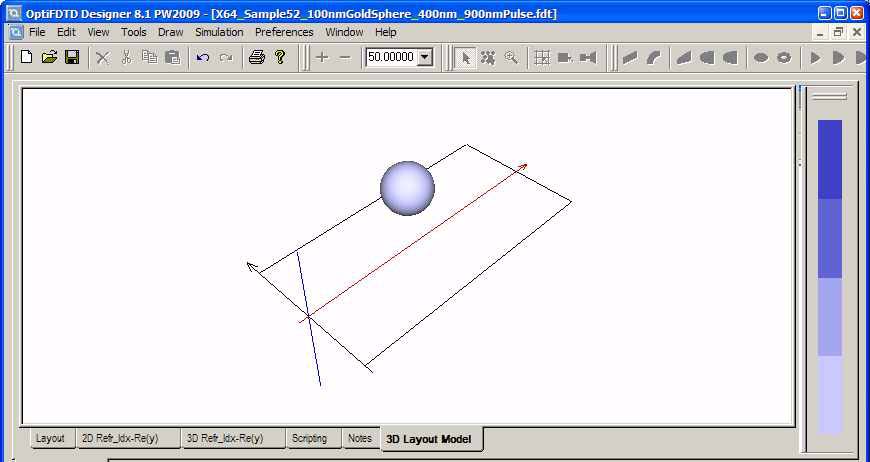
FDTD - Figure 2 Example LayoutFDTD - Figure 1 3D layout mode for sphere

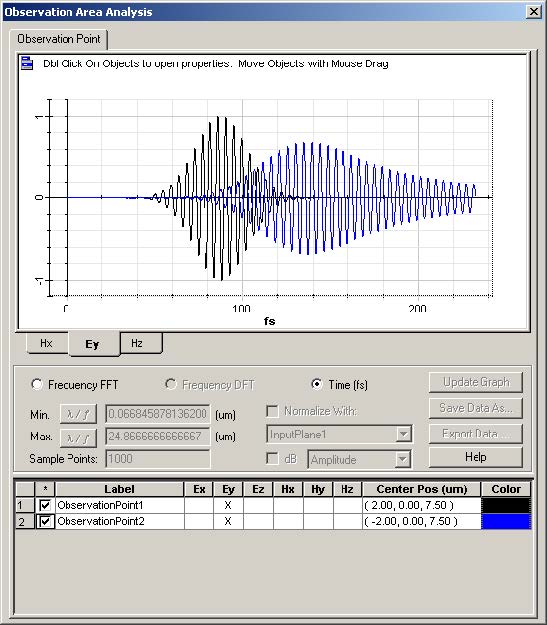
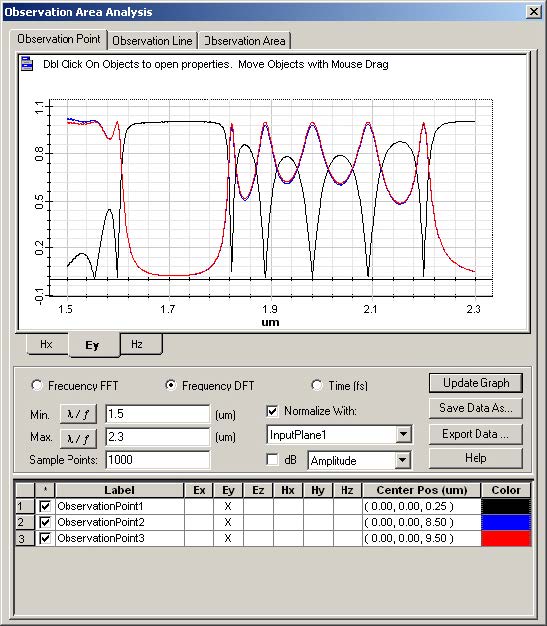
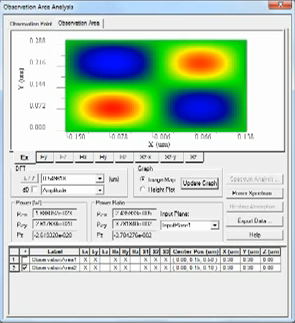
  FDTD - Observation Area Analysis dialog box FDTD - Figure 106 Observation Area Analysis dialog box

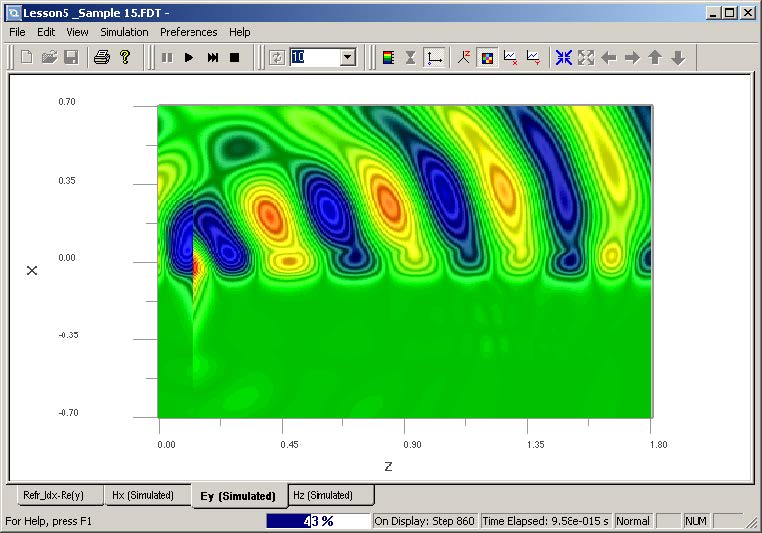
FDTD - Figure 5 OptiFDTD_Simulator FDTD - Figure 40 3D Simulation results

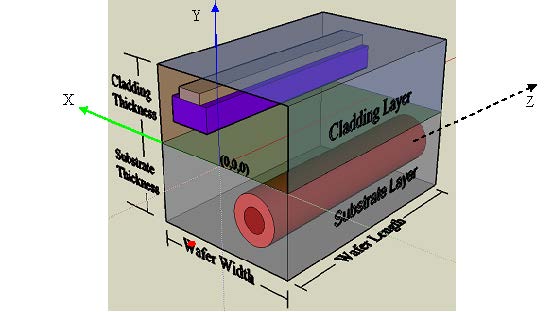
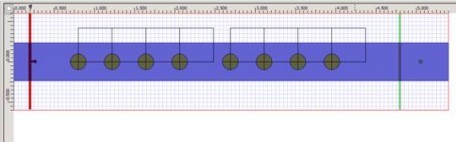
FDTD - Figure 95 PBG layout with new wavepath FDTD - Figure 18 3D Layout

FDTD - Beam size measurement in OptiFDTD(b)

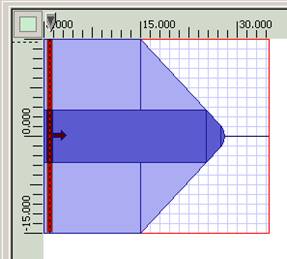
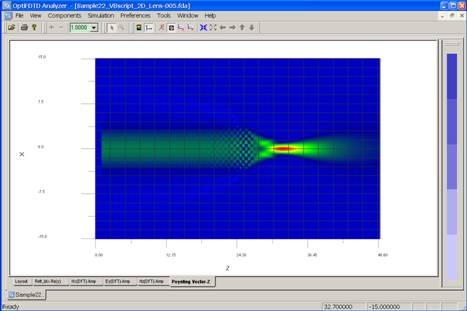
FDTD - Poynting vector for Fiber lens  FDTD - Surface wave propagation model

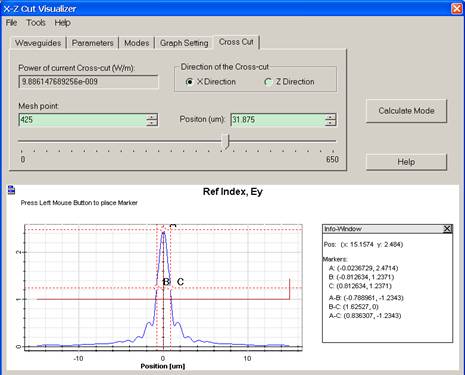
FDTD - Power transmission ratios and normalised powersFDTD - Near field in slice viewer

FDTD - Photonic Crystal Layout FDTD - Diffraction Grating 3D Layouts

Layout in OptiFDTD  Directional grating Coupled waveguide in OptiFDTD

Layout in OptiFDTD  FDTD - Nanoparticle plane wave and the nanoparticle intensity

Related:

Mega Collection Patched - Pack Dslaf Clip4sale

In the world of digital content and software, particularly within the realms of video production, editing, and distribution, enthusiasts and professionals alike often seek comprehensive collections of tools, plugins, and resources that can enhance their workflow, improve output quality, and streamline their processes. One term that has been buzzing within certain circles, especially among those interested in video editing, special effects, and digital visual effects software, is "Pack DSLaF Clip4Sale Mega Collection Patched." This article aims to explore what this pack entails, its significance, and why it has become a sought-after resource.

The "Pack DSLaF Clip4Sale Mega Collection Patched" represents a highly sought-after resource within certain segments of the digital content creation community. Its appeal lies in the convenience, cost-effectiveness, and creative potential it offers. However, it's essential for those interested in acquiring such a collection to proceed with caution, ensuring they source it from legitimate channels, verify compatibility with their existing systems, and understand the potential risks and benefits. As with any digital content or software acquisition, thorough research and consideration are key to maximizing the benefits while minimizing potential drawbacks. pack dslaf clip4sale mega collection patched