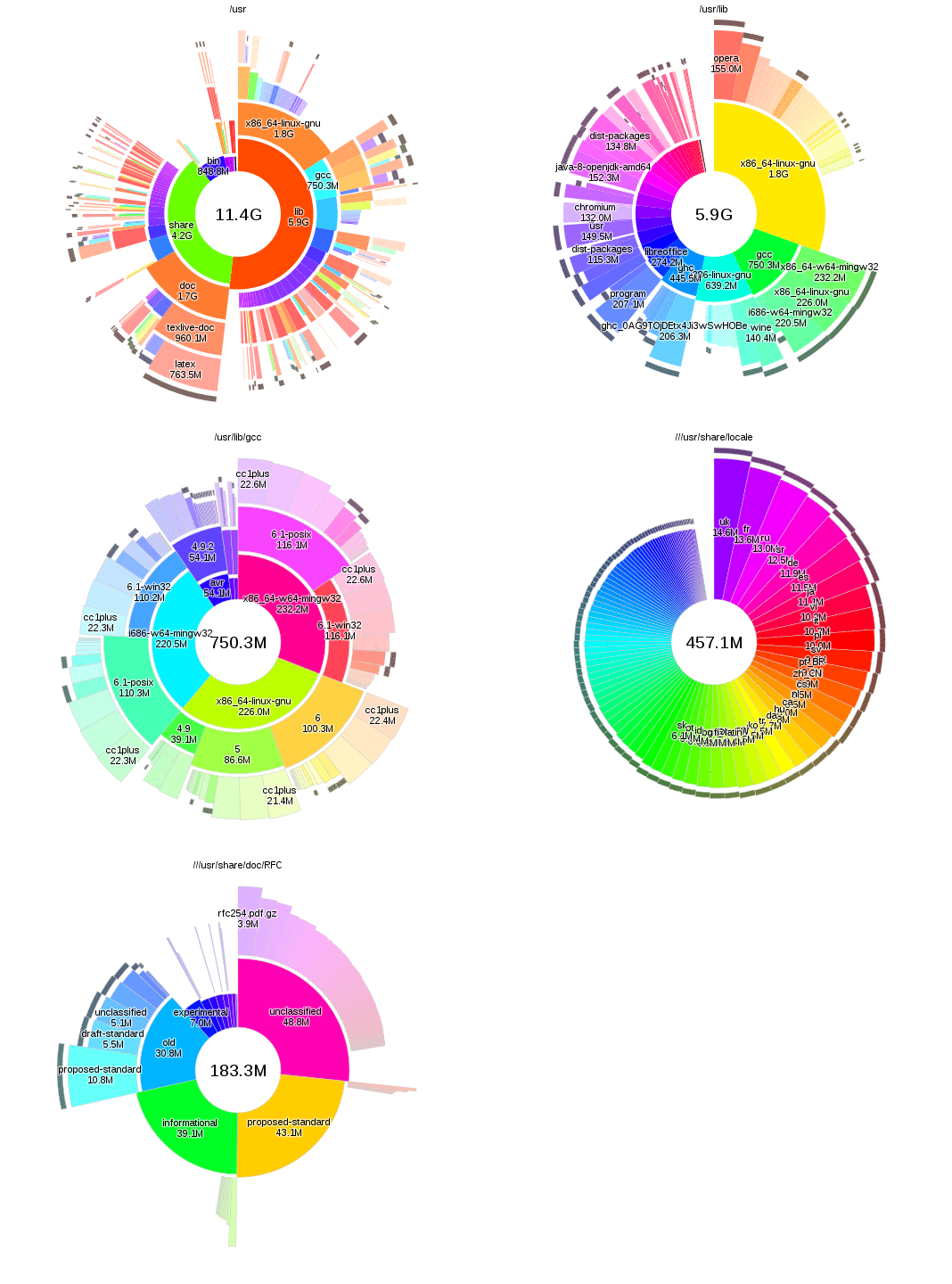
Duc is built to scale to huge filesystems: it will index and display hundreds of millions of files on petabytes of storage without problems.
Duc stores the disk usage in a optimized database, resulting in a fast user interface. No wait times once the index is complete.
Duc comes with a number of user interfaces for quering the database: use Duc on the console with a command line or ncurses interface, on graphical desktops with an X or OpenGL GUI, or over the web using the CGI interface.
The professional version allows you to export detailed reports in Excel, PDF, or XML format, which is useful for storage capacity planning.
TreeSize operates entirely on your local machine. No data is sent to the cloud, ensuring compliance with data privacy regulations like GDPR.
TreeSize v7.1.5 remains an indispensable utility for anyone struggling with storage limitations. Its ability to provide quick, accurate, and detailed visualizations of disk usage makes the process of reclaiming space straightforward and efficient. By identifying large files, duplicates, and hidden storage, it helps maintain a clean, high-performance system. JAM Software TreeSize | JAM Software FAQ - Knowledgebase treesize v7.1.5
Utilize the context menu to delete or move files directly from the app. Conclusion
Identify hidden temporary files or large cached files taking up space on small SSDs. The professional version allows you to export detailed
Quickly identify which users or applications are filling up server storage.
TreeSize shows folder sizes in a clear, tree-like structure. It enables users to see the size of all folders—including subfolders—immediately. The visualization is highly customizable, allowing users to view sizes in bytes, kilobytes, megabytes, or gigabytes. 2. Identifying Large and Old Files TreeSize v7
The software comes in different editions (Free, Personal, Professional), with v7.1.5 bringing stability and refined performance to the tool's core functionality. Key Features of TreeSize v7.1.5
TreeSize is renowned for its speed. It scans local drives, network shares, and NAS devices, often faster than the OS itself.